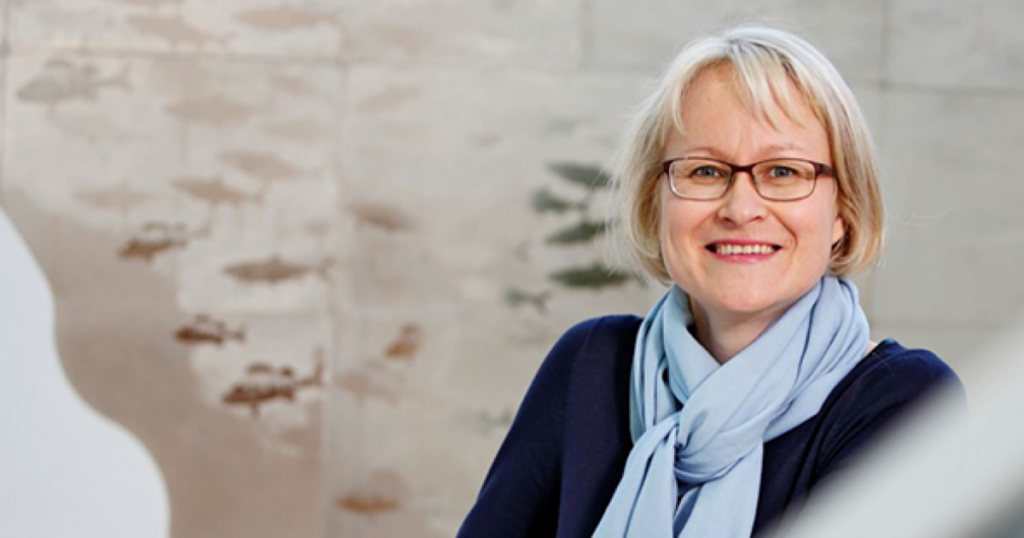
professor profile picture

Karoliina Honkala

Professor at University of Jyväskylä

University of Jyväskylä

Country flag

Finland

This profile is automatically generated from trusted academic sources.

Google Scholar

.

ORCID

.

LinkedIn

Social connections

How do Bangladeshi students reach out?

Sign in for free to see their profile details and contact information.

Meet Kite AI

Contact this professor

Research Interests

Materials Chemistry

100%

Physical Chemistry

30%

Metal Chemistry

90%

Electrochemistry

70%

Catalysis

50%

Density Functional Theory

40%

Electrocatalysis

40%

Ask ApplyKite AI

Start chatting
How can you help me contact this professor?
What are this professor's research interests?
How should I write an email to this professor?

Recent Grants

Grant: Close

Light activation of molecular catalysts for carbon dioxide reduction

Open Date: 2021-04-01

Close Date: 2024-03-01

Grant: Close

Renable Carbon Cycle: Conversion of CO2 to Fuels with Tailored Heterogeneous Catalysts

Open Date: 2020-01-01

Close Date: 2023-12-31

Grant: Close

Catalytic and electrocatalytic oxidation of biomass-derived polyols at the liquid-solid interfaces

Open Date: 2018-01-09

Close Date: 2022-08-31

Grant: Close

Overcoming technology barriers with tailored catalysts: Design of molecularly functionalized heterogeneous catalysts for selective reductions of biomass-derived materials

Open Date: 2017-01-01

Close Date: 2020-12-31

Grant: Close

Building atomistic understanding of metal-support interplay for ethanol reforming catalysis from theory and experiment

Open Date: 2014-01-09

Close Date: 2018-08-31

Positions2

Publisher
source

Karoliina Honkala

University Name
.

University of Jyväskylä

Postdoctoral Researcher Positions in Computational Electrocatalysis and Software Development at University of Jyväskylä

The University of Jyväskylä's Department of Chemistry is inviting applications for two fixed-term Postdoctoral Researcher positions in the field of computational electrocatalysis and software development. The research project, funded by the Research Council of Finland, focuses on advancing catalyst discovery for sustainable energy applications through computational chemistry, electrocatalysis, and high-performance computing. The project aims to develop computational methodologies and deepen the understanding of alcohol electro-oxidation reactions on transition metal catalysts, which are crucial for energy conversion technologies. The two postdoctoral positions offer distinct but closely related research opportunities. The first position centers on software development, specifically the development of GPU-accelerated GPAW software based on density functional theory (DFT) for constant-potential calculations. This role involves computational method development, scientific software engineering, and large-scale simulations using the LUMI supercomputer. The second position focuses on computational electrocatalysis, investigating reaction mechanisms at electrochemical metal–water interfaces and exploring how solvent, applied potential, and cations affect alcohol electro-oxidation on transition metal catalysts. Both roles are embedded in a collaborative environment, working closely with experimental partners and the GPAW development team. Applicants should hold or be about to obtain a doctoral degree in chemistry, physics, materials science, or a related field. For the software development position, experience in computational method development or scientific software development is required. For the electrocatalysis position, experience in computational electrocatalysis or modeling of electrochemical systems is necessary. Excellent English communication skills are expected. The positions offer a salary of approximately 3600–4800 €/month (gross), depending on qualifications and experience, and include a settling-in allowance for relocation. The employment period is from April 1, 2026, to December 31, 2028. The Department of Chemistry at the University of Jyväskylä is internationally recognized for its research and teaching excellence, with key areas including functional molecules and materials, chemical nanoscience, and circular economy. The department provides access to advanced research infrastructure and fosters a vibrant, multidisciplinary, and international research community. Jyväskylä offers a high standard of living, excellent educational and healthcare systems, and a lively cultural scene. To apply, candidates must ensure their ORCID profile is up to date and submit their application, including a CV, motivation letter, publication list, and degree certificate, in English and PDF format via the university's online application form by March 18, 2026. For further information, applicants may contact Professor Karoliina Honkala at [email protected].

just-published

Publisher
source

Karoliina Honkala

University Name
.

University of Jyväskylä

Postdoctoral Researcher in Computational Electrocatalysis and Software Development (2 positions)

The University of Jyväskylä's Department of Chemistry is offering two fixed-term Postdoctoral Researcher positions in a project focused on computational method development and electrocatalysis, funded by the Research Council of Finland. The positions begin on 1 April 2026 and run until 31 December 2028. The project aims to advance computational methodologies and deepen the understanding of alcohol electro-oxidation reactions on transition metal catalysts, which are relevant to sustainable energy technologies. Researchers will leverage the LUMI supercomputer for large-scale simulations of complex electrochemical reactions under realistic conditions. Position 1 centers on software development, specifically the creation of GPU-accelerated GPAW software based on density functional theory (DFT) for constant-potential calculations within a plane-wave framework. The software will be tested and validated for electrochemical systems, involving computational method development, scientific software engineering, and high-performance computing. Position 2 focuses on computational electrocatalysis, investigating reaction mechanisms at electrochemical metal–water interfaces. The research emphasizes the influence of solvent, applied potential, and cations on alcohol electro-oxidation reactions on transition metal catalysts, aiming to clarify structure–activity relationships and mechanistic factors governing catalytic performance at the atomic scale. Both postdoctoral researchers will collaborate closely with each other, experimental partners, and the GPAW development team. The positions are embedded in an active computational chemistry environment with access to national and European high-performance computing infrastructure. The Department of Chemistry is internationally recognized for high-quality research and teaching, offering comprehensive, research-based chemistry education and modern infrastructure, including NMR, mass spectrometry, X-ray crystallography, ICP analytics, and laser laboratories. The Nanoscience Center provides advanced facilities for nanofabrication and characterization. Applicants must hold or be about to obtain a doctoral degree in chemistry, physics, materials science, or a closely related field, with the degree completed before employment begins. Position 1 requires experience in computational method development and/or scientific software development, while Position 2 requires experience in computational electrocatalysis or modeling of electrochemical systems. Excellent written and oral English skills are expected. The University of Jyväskylä offers a vibrant, international research community, excellent working conditions, and support for relocation, including a settling-in allowance. The salary for a Postdoctoral Researcher is approximately 3600-4800 €/month (gross), depending on qualifications and experience. Applications must be submitted via the University of Jyväskylä online application form by March 18, 2026. Required documents include a CV, motivation/cover letter, publication list, and degree certificate, all in English and PDF format. An ORCID profile with public publications is mandatory. Applications sent via email will not be considered. For further information, contact Professor Karoliina Honkala ([email protected]). The University of Jyväskylä is committed to fairness, transparency, and diversity in recruitment, and supports the HR Excellence in Research principles. The campus is located in the heart of Jyväskylä, offering a high standard of living, free schooling, affordable childcare, and excellent opportunities for outdoor and cultural activities.

just-published

Articles16

Collaborators9

Marko M. Melander

University of Jyväskylä

FINLAND

Marianna Kemell

University of Helsinki

FINLAND

Timo Repo

University of Helsinki

FINLAND

Pernille Pedersen

Technical University of Denmark

DENMARK

Mikko Heikkilä

University of Helsinki

FINLAND

Heine Anton Hansen

Technical University of Denmark

DENMARK

Tejs Vegge

Technical University of Denmark

DENMARK

Aku Lempelto

University of Jyväskylä

FINLAND

Henrik Grenman

Full Professor (Chemical Process Intensification)

Åbo Akademi University

FINLAND