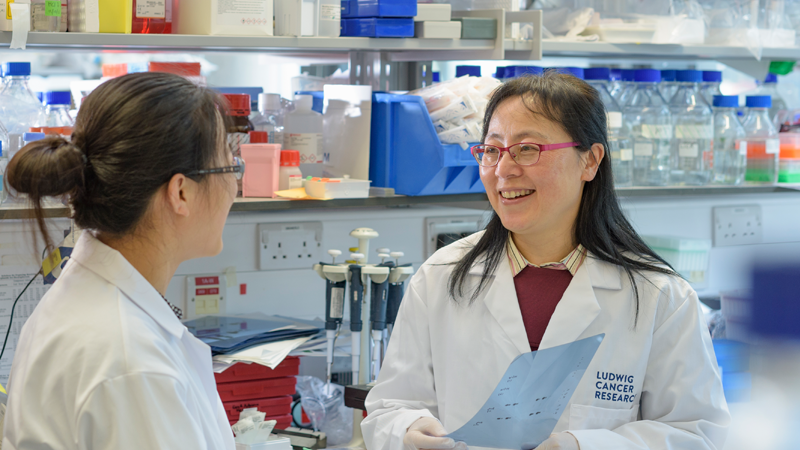

Xin Lu
Top university
Just added
1 day ago
Investigating Why the Small Intestine Is Able to Avoid Cancer Using High Throughput Live-Cell Imaging Organoid Screening University of Oxford in United Kingdom
Degree Level
PhD
Field of study
Molecular Biology
Funding
Funded PhD Project (Students Worldwide)
Deadline
Apr 9, 2026

Country
United Kingdom
University
University of Oxford

How do Chinese students apply for this?
Sign in for free to reveal details, requirements, and source links.
Where to contact
Official Email
Keywords
About this position
This PhD project at the University of Oxford investigates the remarkable rarity of cancer in the small intestine compared to other parts of the gastrointestinal (GI) tract, such as the oesophagus, stomach, and colon. Despite high cancer incidence in most GI regions, the small intestine experiences cancer rates approximately 20 times lower than the large intestine. The project aims to uncover the molecular and cellular mechanisms that protect the small intestine from tumor formation, a key challenge in cancer biology.
Recent advances have identified genetic alterations contributing to GI cancer initiation, progression, and treatment resistance, but the factors preventing small intestine tumors remain largely unknown. The hypothesis is that epithelial cells from different GI regions possess varying levels of cell plasticity—a process crucial for cancer initiation—regulated by external exposures and epigenetic modulators. The project will explore how epigenetic modulators alter cell plasticity and whether epithelial cells from different GI regions respond differently to these modulators.
To quantitatively measure changes in cell plasticity, the research leverages the state-of-the-art SAM (Shape, Appearance and Motion)/SPOT (SAM Phenotype Observation Tool) technology, recently developed by the group (Zhou et al., 2025). This live-cell imaging platform enables detailed morphodynamic analysis and phenotype-genotype coupling in 3D organoids. The project will utilize high-content live-cell imaging of human organoids, applying genetic and chemical compound screening focused on libraries that modulate epigenetic and transcriptional regulation.
Identified hits from the screening will be validated and functionally characterized in vitro using 3D organoid cultures, either alone or in co-culture with immune and stroma cells. Further characterization will employ single cell RNA-seq and spatial transcriptomics to assess effects on cell plasticity and epigenetic/transcriptional regulation of cell fate. If time allows, in vivo validation will be conducted in preclinical models.
The project is supervised by Professor Xin Lu, Director of the Ludwig Institute for Cancer Research, and co-supervised by Professor Simon Buczacki, a clinician scientist and colon cancer surgeon. The student will benefit from expertise and technologies at both the Ludwig Institute and the Nuffield Department of Surgical Sciences, as well as opportunities to engage with Oxford’s scientific and clinical communities and attend national and international conferences. Training includes cell and molecular biology techniques, single cell genomics, and organoid methods, alongside career development activities such as journal clubs, oral presentations, and skills workshops.
Funding is provided through Ludwig studentships, covering a four-year tax-free stipend (£23,000 per annum) and university fees at home and international rates. Applicants must apply via the University of Oxford system for a DPhil in Clinical Medicine, submitting a personal statement and ensuring referees are prepared to provide references by the deadline. Contacting the supervisor to discuss fit is recommended. For further information, see the project and course web pages.
Funding details
Funded PhD Project (Students Worldwide)
What's required
Applicants must apply through the University of Oxford application system for a DPhil in Clinical Medicine. A personal statement (maximum 500 words) is required, following the guidance in the Statement of purpose/personal statement section of the Graduate Admissions DPhil in Clinical Medicine How to Apply page. Referees must be willing to write and submit references by the deadline. No research proposal is needed. Candidates should have a strong background in cell and molecular biology, and will receive training in single cell genomics and organoid techniques. Contacting the supervisor to discuss fit is recommended.
How to apply
Apply via the University of Oxford application system for a DPhil in Clinical Medicine. Enter the project title under proposed field and title of research project. You may apply for a maximum of two Ludwig projects. Include a personal statement and ensure your referees are prepared to submit references by the deadline.
Ask ApplyKite AI
Professors

How do Chinese students apply for this?
Sign in for free to reveal details, requirements, and source links.