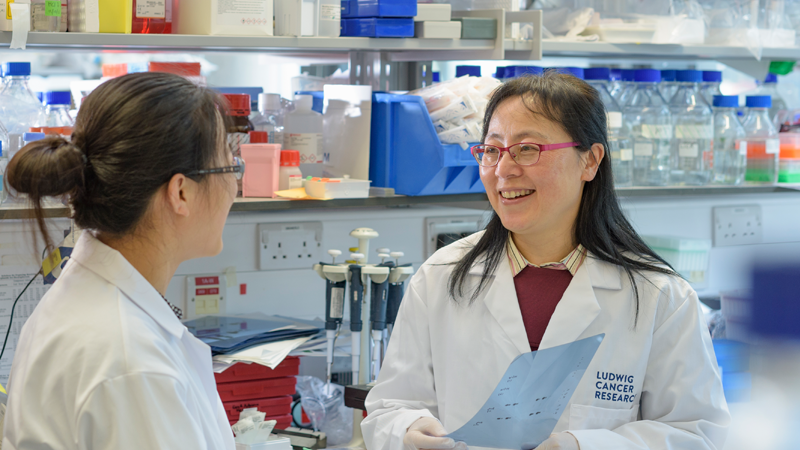

Xin Lu
Top university
Just added
1 day ago
Investigating the Impact of Autoantibodies on Cancer University of Oxford in United Kingdom
Degree Level
PhD
Field of study
Cell Biology
Funding
Funded PhD Project (Students Worldwide)
Deadline
Apr 9, 2026

Country
United Kingdom
University
University of Oxford

How do Indian students apply for this?
Sign in for free to reveal details, requirements, and source links.
Where to contact
Official Email
Keywords
About this position
This PhD project at the University of Oxford investigates the impact of autoantibodies (AAbs) on cancer, focusing on their potential as biomarkers and their role in tumorigenesis. Autoantibodies are produced by the immune system and recognize self-antigens; while present in all individuals, their excessive production is associated with pathological conditions such as autoimmune diseases and cancer. Recent research has linked increased AAb production to patient responses to checkpoint inhibitor blockade (CBI) immunotherapies, including anti-PD1 and anti-PDL1 treatments. AAbs against cytokines and chemokines have been shown to predict disease severity, suggesting their utility as biomarkers and indicators of immune fitness.
The project aims to systematically profile AAbs in cohorts ranging from healthy individuals to patients with precancerous conditions, operable cancers, and metastatic cancers, both before and after immunotherapy. State-of-the-art technologies such as yeast display and protein array will be used to generate cancer AAb 'fingerprints.' Unique AAbs will be cloned from human peripheral blood mononuclear cells (PBMCs) and assayed in vitro using molecular and cellular biology techniques, including live cell imaging.
Building on findings from the LUD2015-005 trial of oesophageal adenocarcinoma patients, the project will expand the investigation to broader cancer and healthy cohorts. The goal is to identify AAbs of interest and functionally validate their role in tumorigenesis, laying the groundwork for their use as biomarkers for early detection, treatment stratification, or novel therapies. Key approaches include co-culture techniques, antibody-antigen interaction studies, organoid technology to explore tumor-immune cell interactions, and single-cell sequencing to dissect cellular responses. Additional assays such as antibody-dependent cell-mediated cytotoxicity (ADCC) will be performed.
The project is supervised by Professor Xin Lu, Director of the Ludwig Institute for Cancer Research, and Professor Lynn Dustin, an expert in autoimmunity. Students will receive training in cell and molecular biology techniques, single-cell genomics, and organoid technology, benefiting from the expertise and resources at both the Ludwig Institute and Kennedy Institute. Opportunities for integration with Oxford's scientific and clinical communities, as well as national and international conferences, are provided. The Ludwig training and career development programme includes regular oral presentations, journal clubs, and skills development in writing, data management, and public engagement.
Funding is available through Ludwig studentships, which provide four years of support including a tax-free stipend (£23,000 per annum) and university fees at home and international rates. Applicants must apply via the University of Oxford application system for a DPhil in Clinical Medicine, submitting a personal statement and ensuring referees are prepared to provide references by the deadline. Contacting the supervisor to discuss fit is recommended. The application deadline is April 9, 2026.
Funding details
Funded PhD Project (Students Worldwide)
What's required
Applicants must apply through the University of Oxford application system for a DPhil in Clinical Medicine. A personal statement (maximum 500 words) is required, following the guidance in the Statement of purpose/personal statement section of the Graduate Admissions DPhil in Clinical Medicine How to Apply page. Referees must be willing to write and submit references by the deadline. No research proposal is required. Candidates should have a strong background in relevant biological or medical sciences. Contacting the supervisor to discuss fit is recommended.
How to apply
Apply via the University of Oxford application system for a DPhil in Clinical Medicine. Enter the project title under proposed field and title of research project. You may apply for a maximum of two Ludwig projects. Contact the supervisor to discuss your application and fit for the lab.
Ask ApplyKite AI
Professors

How do Indian students apply for this?
Sign in for free to reveal details, requirements, and source links.