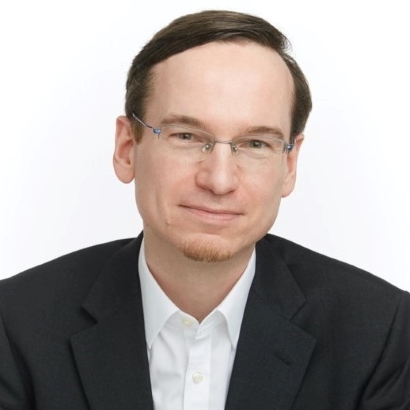

Marcus Kaiser
3 months ago
Leveraging Population Activity Trajectories to Optimise Brain-Computer Interfaces for Arm Movement University of Nottingham in United Kingdom
Degree Level
PhD
Field of study
Computer Science
Funding
Funded PhD Project (Students Worldwide)
Deadline
Expired

Country
United Kingdom
University
University of Nottingham

How do Indian students apply for this?
Sign in for free to reveal details, requirements, and source links.
Where to contact
Official Email
Keywords
About this position
Restoring the ability to move, walk, or communicate after nervous system injury is rapidly transitioning from science fiction to reality, thanks to advances in brain-computer interfaces (BCIs). These cutting-edge systems translate directly-recorded cortical activity into intended movement commands, leveraging artificial intelligence to bridge the gap between brain signals and physical actions. However, current BCIs are limited by their data and training requirements, lack of generalizability across tasks and individuals, and eventual failure as brain signals degrade over time.
This PhD project at the University of Nottingham aims to revolutionize BCIs for arm movement by harnessing new insights into how motor cortex neural activity encodes intended movement. The research will involve analyzing multiple datasets of cortical recordings during arm movements, developing novel BCI algorithms that directly translate motor cortex encodings into movement commands, and testing these approaches for robustness and generalizability.
As a student, you will gain hands-on experience with state-of-the-art neural activity data, learn advanced techniques for analyzing the relationship between neural signals and behavior, and receive training in dynamical systems analysis, recurrent neural network modeling, and AI-based decoding. The project is supervised by Professor Marcus Kaiser (lead supervisor), Dr. Paul Briley, and Professor Steven Marwaha, offering a multidisciplinary environment spanning neuroscience, biomedical engineering, and computational modeling.
This opportunity is fully funded by the Medical Research Council, providing a 4-year studentship that covers tuition fees (for both home and international students), a stipend, laptop allowance, research training and support grant (£5,000 per annum), and travel allowance (£300 per annum). The position is open to applicants from the UK, EU, and internationally, with a cap on international recruitment at 30% of the cohort due to funding stipulations.
Applicants should have or expect to obtain a first or upper second class degree in neuroscience, biomedical engineering, computer science, or a related field. Experience with data analysis, neural networks, or AI is highly desirable. For further details and to apply, visit the MRC AIM website. The application deadline is 12:00 pm GMT on January 9, 2026.
References supporting the research include Drew (2022) Nature, Patrick-Krueger et al (2024) Nature Reviews Bioengineering, Colins-Rodriguez et al (2024) Journal of Neuroscience, and Zimnik & Churchland (2021) Nature Neuroscience.
For project enquiries, contact Prof. Marcus Kaiser at [email protected]. Apply online and ensure all required documents are submitted before the deadline.
Funding details
Funded PhD Project (Students Worldwide)
What's required
Applicants should hold or expect to hold a first or upper second class undergraduate degree or equivalent in neuroscience, biomedical engineering, computer science, or a related discipline. Experience with data analysis, neural networks, or AI is desirable. International applicants are welcome, but recruitment is capped at 30% of the cohort. No specific language test requirements are mentioned.
How to apply
Submit your application via the MRC AIM website. Review eligibility and funding details before applying. Contact Prof. Marcus Kaiser for project enquiries. Ensure all required documents are included in your application.
Ask ApplyKite AI
Professors

How do Indian students apply for this?
Sign in for free to reveal details, requirements, and source links.