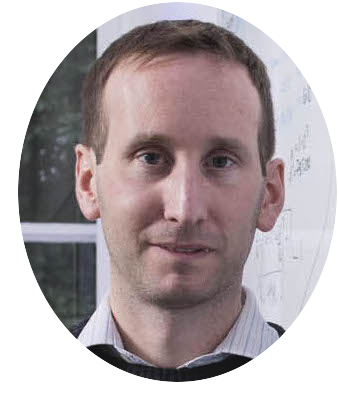

Jonathan Taylor
Top university
1 month ago
PhD in High-Speed Fluorescence Lifetime Imaging for Microfluidic Cell Sorting University of Glasgow in United Kingdom
Degree Level
PhD
Field of study
Biomedical Engineering
Funding
Funded PhD Project (Students Worldwide)
Deadline
Expired

Country
United Kingdom
University
University of Glasgow

How do Indian students apply for this?
Sign in for free to reveal details, requirements, and source links.
Where to contact
Official Email
Keywords
About this position
This PhD project at the University of Glasgow focuses on developing high-speed fluorescence lifetime imaging (FLIM) for microfluidic cell sorting, with the aim of distinguishing between different types of immune cells in the context of autoimmune diseases such as rheumatoid arthritis and inflammatory bowel disease. FLIM is a powerful imaging technique capable of differentiating between 'problematic' and 'helpful' immune cells, which could enable more targeted treatments for these conditions. However, current FLIM methods are too slow for high-throughput applications. This project will leverage new SPAD array camera technology and advanced computer algorithms to enable rapid imaging of blood cells flowing through microfluidic systems, potentially revolutionizing flow cytometry and cell sorting in biomedical research and clinical diagnostics.
The successful candidate will join the School of Physics and Astronomy, working under the supervision of Professor Jonathan Taylor in a diverse and supportive research group. The project offers the opportunity to develop advanced skills in optical microscopy, custom-built optical systems, and interdisciplinary collaboration. The Imaging Concepts Group, comprising around 20 researchers, is engaged in cutting-edge research in advanced imaging techniques with applications in both commercial and biomedical fields. Ongoing research includes real-time image analysis, adaptive and compressive imaging, and hyperspectral imaging for medical and industrial uses. The group collaborates with academic and industrial partners in the UK and internationally.
Applicants should have a strong background in experimental physics, with practical skills and an enthusiasm for real-world applications. Experience in optics is desirable but not essential, and strong programming skills (preferably in Python) are required. Candidates should hold or expect to obtain a 1st or 2.i class degree in Physics or a related physical science, or an equivalent qualification from an overseas institution. The position is fully funded for UK-resident applicants, with additional scholarships available for underrepresented groups and competitive funding for outstanding international candidates.
The application deadline is January 26, 2026, with an October start date. Interested applicants should send a CV and covering letter to Professor Jonathan Taylor, outlining their interest in the project and relevant experience. For more information about the research group and ongoing projects, visit the provided academic web pages.
Funding details
Funded PhD Project (Students Worldwide)
What's required
Applicants should have practical experimental physics skills, ideally with experience in optics, and a strong aptitude for computer programming (preferably in Python). A 1st or 2.i class degree (awarded or predicted) in Physics or a related physical science, or an equivalent standard degree from an overseas university, is required. Candidates should demonstrate proven problem-solving abilities, enthusiasm for innovation and creative thinking, and an interest in practical experimental physics with real-world applications. Prior experience in optics is desirable but not essential.
How to apply
Send a CV and covering letter to [email protected], describing your interest in the project and how you meet the criteria. Review the research group websites for more information. Apply as soon as possible before the deadline.
Ask ApplyKite AI
Professors
How do Indian students apply for this?
Sign in for free to reveal details, requirements, and source links.