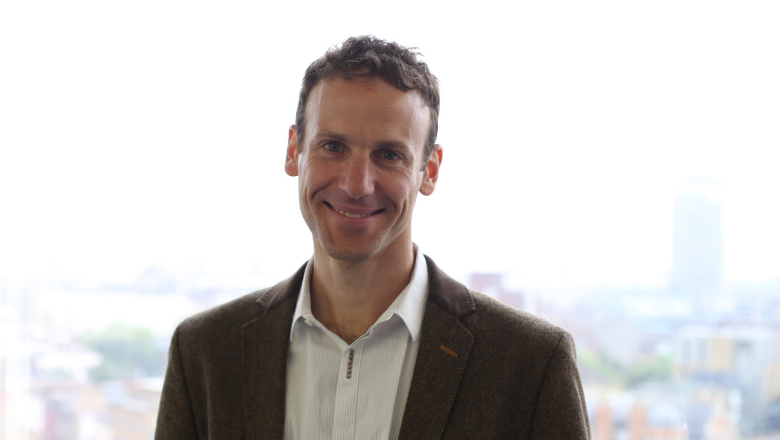

Tom Vercauteren
Top university
5 months ago
Anatomy localisation in X-ray fluoroscopy videos for mechanical thrombectomy King’s College London in United Kingdom
Degree Level
PhD
Field of study
Neuroscience
Funding
Funding details are not explicitly stated in the post. Please refer to the official application page for information regarding stipend, tuition coverage, and other financial support.
Deadline
Expired

Country
United Kingdom
University
King’s College London

How do Korean students apply for this?
Sign in for free to reveal details, requirements, and source links.
Where to contact
Keywords
About this position
This PhD opportunity at King's College London focuses on developing advanced computer vision and AI methods for anatomy localisation in X-ray fluoroscopy videos, specifically for mechanical thrombectomy procedures in acute ischemic stroke treatment. The project is highly interdisciplinary, involving collaboration between academic supervisors Professor Tom Vercauteren and Dr Thomas Booth, and industry partner Telos Health, represented by Konrad Leibrandt. The research aims to improve spatial understanding for interventional neuroradiologists by automating the identification of anatomical structures in real-time surgical imaging. Candidates will work closely with clinical experts to build annotated datasets and validate new algorithms.
The position is open for a February 2026 start, and applicants should have a strong background in computer science, biomedical engineering, or related fields, with skills in machine learning and medical imaging. Funding details are not specified; applicants should consult the official application page for more information.
To apply, visit the Surgery CDT website and follow the application instructions. This is an excellent opportunity for those interested in the intersection of medical robotics, AI, and clinical impact.
Funding details
Funding details are not explicitly stated in the post. Please refer to the official application page for information regarding stipend, tuition coverage, and other financial support.
What's required
Applicants should hold or expect to obtain a first or upper second class degree (or equivalent) in a relevant discipline such as computer science, biomedical engineering, medical physics, or a related field. Experience with machine learning, computer vision, or medical imaging is highly desirable. Strong programming skills and the ability to work collaboratively in interdisciplinary teams are preferred. English language proficiency is required as per King's College London standards.
How to apply
Visit the Surgery CDT Apply page via the provided link to review application instructions and submit your application for February 2026 entry. Prepare your academic transcripts, CV, and supporting documents. Contact the supervisors if you have specific questions.
Ask ApplyKite AI
Professors
How do Korean students apply for this?
Sign in for free to reveal details, requirements, and source links.