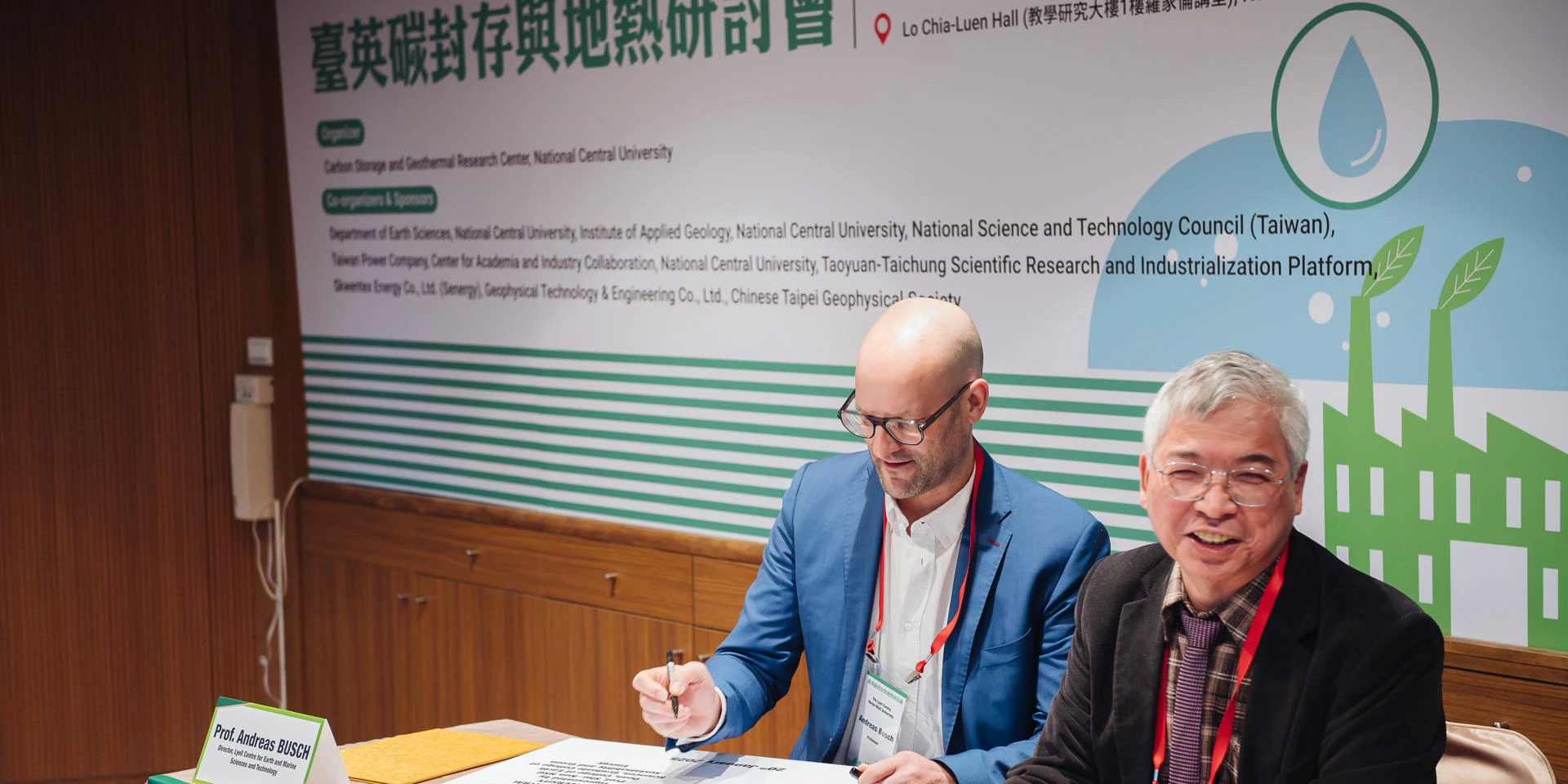

Andreas Busch
2 months ago
PhD in Geomechanics, Geophysics, and Geochemistry of Reactive Fracturing in Mafic Rocks Heriot-Watt University in United Kingdom
Degree Level
PhD
Field of study
Geology
Funding
Funding details are not explicitly stated, but the position is a fully funded PhD studentship for UK-based students. It is part of the IAPETUS Doctoral Training Partnership, which typically covers tuition fees and provides a stipend for living expenses.
Deadline
Expired

Country
United Kingdom
University
Heriot-Watt University

How do Korean students apply for this?
Sign in for free to reveal details, requirements, and source links.
Where to contact
Official Email
Keywords
About this position
This PhD project at Heriot-Watt University, in collaboration with the University of Glasgow, the University of Edinburgh, and Pacific NorthWest National Lab, focuses on reactive fracturing and carbonation dynamics in mafic and ultramafic rocks under CO₂ storage conditions. The research aims to advance understanding of how carbonate mineralisation and crystallisation-induced stress drive fracture evolution and permeability changes in basaltic systems exposed to CO₂-rich fluids. The project integrates geomechanics, geophysics, geochemistry, and advanced imaging techniques such as X-ray micro-computed tomography (µCT) and acoustic emission (AE) monitoring to visualise and quantify fracture growth, mineral precipitation, and microcracking in real time.
Key research questions include: the influence of crystallisation-induced stress on fracture propagation, the coupled geochemical and mechanical controls on carbonation in basalt, and the integration of µCT and AE monitoring to model reactive fracturing processes. The project will also explore the potential of mafic rock carbonation for critical mineral liberation. Laboratory experiments will be conducted under realistic pressure, temperature, and stress conditions, with a reactive transport modelling framework developed to link observed geochemical gradients with mechanical effects.
The methodology involves specimen preparation, baseline characterisation, CO₂–fluid reaction experiments, in-situ monitoring, post-experiment multi-scale characterisation, image-based mechanics, and reactive transport modelling. The project timeline spans imaging workflow, AE monitoring, pilot experiments, advanced microCT, geochemical analyses, reactive transport modelling, and integration of lab tests with modelling for upscaling to reservoir-relevant metrics.
Applicants should have a strong background in geoscience, geomechanics, geophysics, geochemistry, or related fields, with experience in laboratory experiments and imaging techniques being desirable. The position is open to UK-based students only at this stage and is part of the IAPETUS Doctoral Training Partnership, which typically provides full funding including tuition and stipend. The application deadline is January 5th, 2025. For more information or informal enquiries, contact Prof. Andreas Busch at [email protected].
Keywords: reactive fracturing, mafic rocks, geomechanics, geophysics, geochemistry, imaging, CO2 storage, basalt, mineralisation, acoustic emission, microCT, hydrothermal experiments.
Funding details
Funding details are not explicitly stated, but the position is a fully funded PhD studentship for UK-based students. It is part of the IAPETUS Doctoral Training Partnership, which typically covers tuition fees and provides a stipend for living expenses.
What's required
Applicants must be UK-based students at this stage. Candidates should have a strong background in geoscience, geomechanics, geophysics, geochemistry, or related fields. Experience with laboratory experiments, imaging techniques (such as microCT), and data analysis is desirable. A relevant undergraduate or master's degree with excellent academic performance is required. Safety and compliance training will be provided.
How to apply
Apply via the IAPETUS DTP website by the stated deadline. Review the project details and prepare your application materials. For informal enquiries, contact Prof. Andreas Busch at [email protected]. Use the provided links for further information and application submission.
Ask ApplyKite AI
Professors

How do Korean students apply for this?
Sign in for free to reveal details, requirements, and source links.