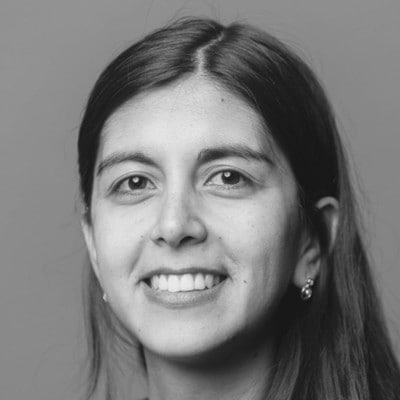
professor profile picture

Fernanda Duarte

Associate Professor

University of Oxford

Country flag

United Kingdom

This profile is automatically generated from trusted academic sources.

Google Scholar

.

ORCID

.

LinkedIn

Social connections

How do Korean students reach out?

Sign in for free to see their profile details and contact information.

Meet Kite AI

Contact this professor

Research Interests

Organic Chemistry

100%

Polymer Chemistry

100%

Molecular Electronics

70%

Cycloaddition Reactions

60%

Organic Reactions

60%

Chemical Synthesis

50%

Mechanistic Chemistry

40%

Ask ApplyKite AI

Start chatting
How can you help me contact this professor?
What are this professor's research interests?
How should I write an email to this professor?

Recent Grants

Grant: Close

Supporting the OpenMM Community-led Development of Next-Generation Condensed Matter Modelling Software

Open Date: 2022-11-01

Close Date: 2025-10-31

Grant: Open

Investigation of Transition-Metal Catalysed C-H Activation Using Quantum Chemistry and Machine Learning

Open Date: 2022-09-30

Close Date: 2026-09-29

Grant: Close

Electrostatic Catalysis

Open Date: 2022-02-01

Close Date: 2025-01-31

Grant: Close

Revolutionising chemical synthesis with machine learning

Open Date: 2020-09-30

Close Date: 2024-09-29

Grant: Close

Plagiarizing Proteins: In Silico Evolution of Catalysts for Selective Chemical Synthesis

Open Date: 2015-11-01

Close Date: 2017-01-01

Positions2

Publisher
source

Fernanda Duarte

University Name
.

University of Oxford

PhD and Postdoctoral Positions in Computational Chemistry, Machine Learning, and Catalysis at University of Oxford

The University of Oxford announces upcoming opportunities for a PhD position and two postdoctoral research positions as part of the ERC CoG-funded project ML4MetaLigM, led by Associate Professor Fernanda Duarte. The project aims to develop advanced computational methods to model chemical reactivity in the condensed phase, integrating physics-based models with artificial intelligence for applications in catalysis and molecular design. This interdisciplinary research will appeal to candidates interested in computational chemistry, machine learning, AI-driven molecular design, and software development for scientific applications. The research group is based in the Department of Chemistry at the University of Oxford, with collaborations across Oxford Chemistry and Hertford College. The project offers a stimulating environment for those passionate about chemical reactivity across scales, the development of machine learning interatomic potentials (MLIPs), and the intersection of physics, chemistry, and computer science. Applicants should have a strong background in computational chemistry, machine learning, physics-based modeling, or related fields. Experience with software development and a keen interest in catalysis and molecular design are highly desirable. The positions are fully funded by the ERC CoG grant, with further details on stipends, salaries, and application procedures to be announced soon. The anticipated start date for the PhD position is October 2026. Interested candidates are encouraged to follow the provided links to learn more about the research group and stay updated on the official application call. This is an excellent opportunity to join a leading research team at the University of Oxford and contribute to cutting-edge developments in computational chemistry and AI-driven molecular science.

just-published

Publisher
source

Fernanda Duarte

University Name
.

University of Oxford

Postdoctoral Research Associate in Computational Chemistry and Machine Learning at University of Oxford

The University of Oxford, through the group led by Associate Professor Fernanda Duarte, is recruiting for a Postdoctoral Research Associate position in the field of computational chemistry. The group focuses on reaction modelling, machine learning interatomic potentials (MLIPs), and scientific software development, offering a dynamic research environment at the intersection of chemistry and computer science. This opportunity is ideal for candidates with expertise in computational chemistry, machine learning, and software engineering, who are interested in advancing research in chemical modelling and the development of scientific tools. The position is based in the Department of Chemistry at the University of Oxford, a world-leading institution renowned for its research excellence. The successful candidate will join a collaborative team working on cutting-edge projects in computational chemistry and machine learning, contributing to the development of new methodologies and software for chemical research. The group values interdisciplinary skills and encourages applications from candidates with strong programming backgrounds and experience in relevant research areas. Applicants should hold a PhD in chemistry, computational chemistry, computer science, or a related discipline. Experience in reaction modelling, MLIPs, or scientific software development is highly desirable. The ability to work effectively in a team and contribute to collaborative research projects is essential. The position offers a competitive salary and the opportunity to work in a stimulating academic environment with access to state-of-the-art resources. The application deadline is 18 March 2026. Interested candidates should review the detailed job description and apply via the Oxford Chemistry job portal. For more information about the research group and ongoing projects, visit the provided links.

just-published

Articles20

Collaborators9

Philip Miller

Senior Lecturer

Imperial College London

UNITED KINGDOM

Yujia Qing

-

UNITED KINGDOM

Guy C. Lloyd-Jones

University of Edinburgh

UNITED KINGDOM

Christopher Schofield

University of Oxford

UNITED KINGDOM

Ken Yamazaki

Assistant Professor

Okayama University

JAPAN

Alex Saywell

University of Nottingham

UNITED KINGDOM

Adrian Mulholland

Professor at School of Physics

University of Bristol

UNITED KINGDOM

Harry Anderson

University of Oxford

UNITED KINGDOM

Ana Sofia Fernandes Oliveira

University of Bristol

UNITED KINGDOM