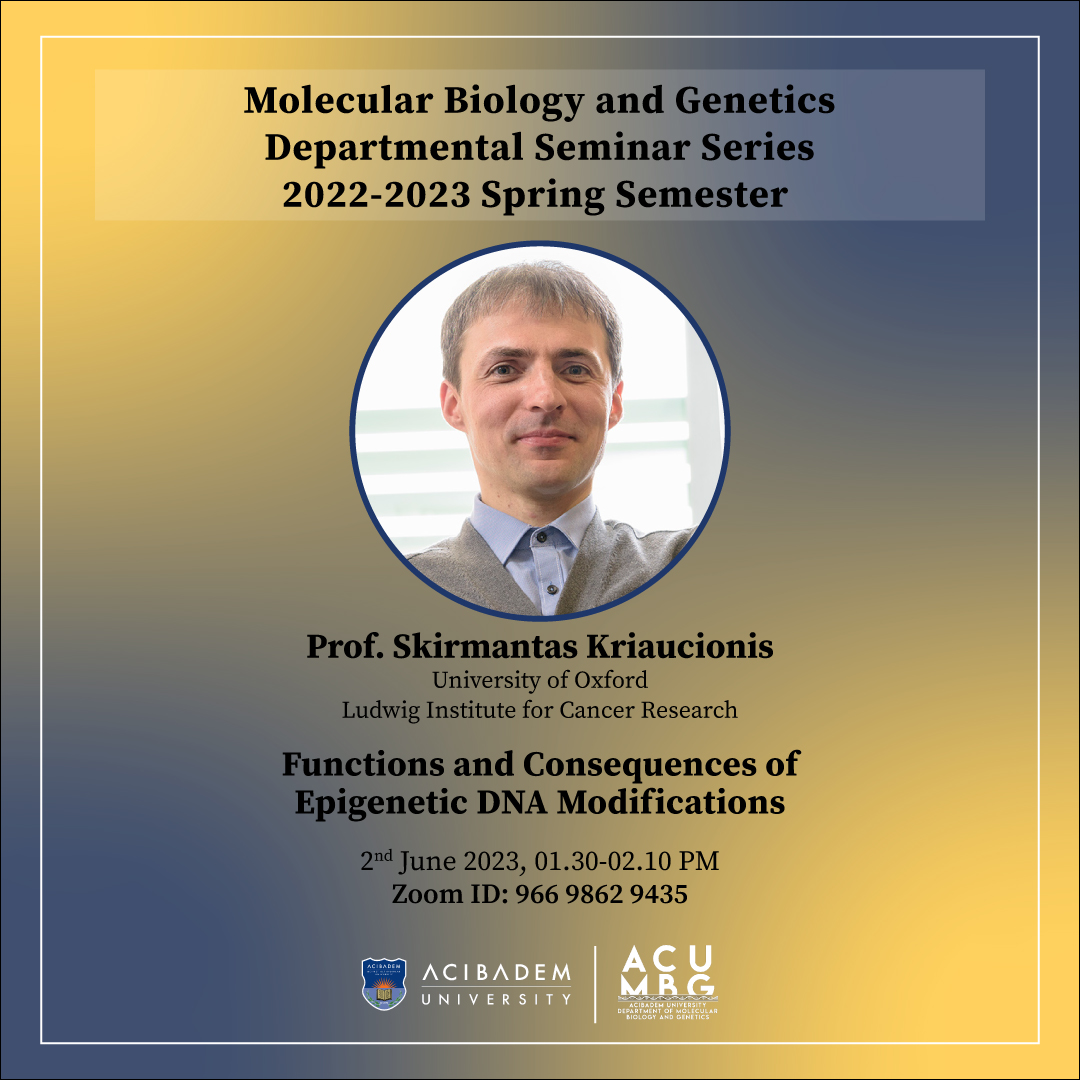
professor profile picture

Skirmantas Kriaucionis

Professor at Nuffield Department of Medicine

University of Oxford

Country flag

United Kingdom

Has open position

This profile is automatically generated from trusted academic sources.

Google Scholar

.

ORCID

.

LinkedIn

Social connections

How do Korean students reach out?

Sign in for free to see their profile details and contact information.

Meet Kite AI

Contact this professor

Send an email
LinkedIn
ORCID
Google Scholar

Research Interests

Cell Biology

20%

Biochemistry

20%

Epigenetic

30%

Cancer Biology

20%

Genomic

20%

Prion Biology

10%

Gastric Cancer

10%

Ask ApplyKite AI

Start chatting
How can you help me contact this professor?
What are this professor's research interests?
How should I write an email to this professor?

Positions1

Publisher
source

Skirmantas Kriaucionis

University Name
.

University of Oxford

Mutational Mechanisms and Diet in Cancer: Computational and Experimental Approaches to Gastrointestinal Carcinogenesis

The project "Mutational Mechanisms and Diet in Cancer" at the University of Oxford investigates how somatic mutations, a fundamental driver of cancer, are influenced by modifiable lifestyle factors—specifically, dietary components. The research aims to identify which aspects of diet contribute to mutagenesis in gastrointestinal cancers and to elucidate the underlying molecular mechanisms. The hypothesis is that the risk of gastrointestinal cancers is shaped by diet-associated mutagenesis, arising from the composition and chemical modification of nucleic acids and nucleotides consumed via diet. Students will primarily engage in computational analyses of mutational patterns in gastrointestinal cancer genomes, leveraging bioinformatics and machine learning approaches to discover mutation signatures. The project also offers opportunities for experimental work in model systems developed within the group, including state-of-the-art wet-lab techniques such as polymerase error sequencing (PER-seq) and PacBio HiDef-seq. Training in both computational and experimental methods will be provided, with wet-lab experience available from experienced postdoctoral researchers. The research group is based in the Ludwig Institute for Cancer Research within the Nuffield Department of Medicine, University of Oxford. Applicants should have strong training in computational biology or bioinformatics. Additional training will be provided in mutational signature analysis and machine learning. The project is well-suited for students interested in cancer biology, genomics, genetics, molecular biology, and the intersection of diet and disease. Funding is available through Ludwig studentships, which provide four years of support including a tax-free stipend (£23,000 per annum) and university fees at both home and international rates. Applications must be submitted via the University of Oxford application system for a DPhil in Clinical Medicine. Applicants may apply for up to two Ludwig projects and must include a personal statement (maximum 500 words). No research proposal is required, but referees must be willing to submit references by the deadline. For project-specific enquiries, contact Prof Skirmantas Kriaucionis at [email protected]. For application enquiries, contact [email protected]. The application deadline is Thursday, April 9, 2026. For further information and to apply, visit the University of Oxford Graduate Admissions page for DPhil in Clinical Medicine. References supporting the research include recent publications in Nature Genetics and Genome Research, highlighting the group’s expertise in mutational mechanisms and epigenetic regulation in cancer.

just-published

Collaborators2

Rob Klose

Chair and Professor of Genetics

University of Oxford

UNITED KINGDOM

Adrian Bird

Buchanan Professor of Genetics

University of Edinburgh

UNITED KINGDOM