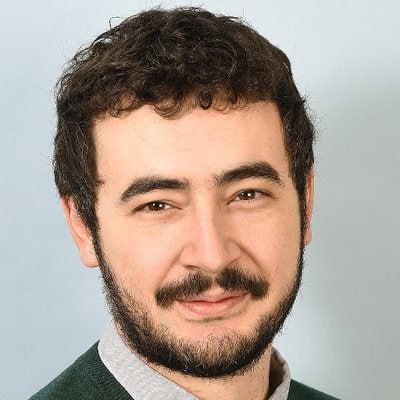

Giuseppe Carleo
1 week ago
PhD Positions in Machine Learning for Complex Quantum States (Quantum Physics, Quantum Computing, ML) École Polytechnique Fédérale de Lausanne in Switzerland
Degree Level
PhD
Field of study
Computer Science
Funding
The positions are fully funded as part of the collaborative research initiative 'Machine Learning for Complex Quantum States' (MLCQS), covering stipend and tuition fees. Specific stipend amounts are not mentioned.
Deadline
Expired

Country
Switzerland
University
École Polytechnique Fédérale de Lausanne

How do Nigerian students apply for this?
Sign in for free to reveal details, requirements, and source links.
Where to contact
Keywords
About this position
The collaborative research initiative “Machine Learning for Complex Quantum States” (MLCQS) is offering multiple fully funded PhD positions across eleven institutions in Germany and Switzerland, including the École Polytechnique Fédérale de Lausanne (EPFL). The initiative focuses on leveraging machine learning to address challenges in quantum simulation, quantum computing, and the study of complex quantum systems. Research topics include neural quantum states, quantum simulation algorithms, information dynamics of strongly interacting bosons, qutrit-based quantum computing, feedback control of quantum dynamics, and optimal readout of quantum simulators. The projects are supervised by leading academics such as Giuseppe Carleo (EPFL), Annabelle Bohrdt (LMU Munich), Markus Schmitt (Regensburg University), Christof Weitenberg (TU Dortmund), Monika Aidelsburger (MPQ, Garching), Marin Bukov (MPI PKS, Dresden), and Markus Heyl (Augsburg University).
Applicants should have a strong background in quantum many-body physics, quantum optics, or quantum information, and a keen interest in applying machine learning to quantum systems. The positions are ideal for candidates with a master’s degree in physics or a related field, and experience with computational or experimental quantum research. The MLCQS consortium provides a vibrant, interdisciplinary environment with opportunities to collaborate across institutions and work on both theoretical and experimental projects. Funding covers stipend and tuition, with applications reviewed starting February 27, 2026. Interested candidates should send a CV and motivation letter to the contact email provided in the official call.
Key research areas: machine learning, quantum physics, quantum computing, quantum simulation, quantum information, ultracold atoms, neural quantum states, quantum optics.
Funding details
The positions are fully funded as part of the collaborative research initiative 'Machine Learning for Complex Quantum States' (MLCQS), covering stipend and tuition fees. Specific stipend amounts are not mentioned.
What's required
Applicants should have a strong background in quantum many-body physics, quantum optics, or quantum information. Motivation and interest in machine learning for quantum systems are essential. Candidates should hold a relevant degree (typically a master's) in physics or a closely related field. Experience with computational methods and/or experimental techniques in quantum systems is advantageous. Good communication skills and the ability to work in a collaborative, interdisciplinary environment are expected.
How to apply
Send your CV and a motivation letter to the contact email provided in the call. Applications will be reviewed starting February 27, 2026. Review the project descriptions and indicate your preferred research area. Follow any additional instructions on the official call page.
Ask ApplyKite AI
Professors

How do Nigerian students apply for this?
Sign in for free to reveal details, requirements, and source links.