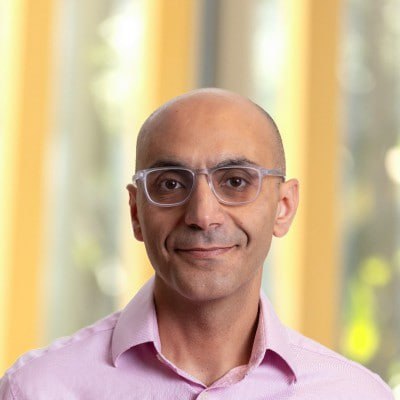
professor profile picture

Arman Ahnood

Senior Lecturer

RMIT University

Country flag

Australia

Has open position

This profile is automatically generated from trusted academic sources.

Google Scholar

.

ORCID

.

LinkedIn

Social connections

How do Nigerian students reach out?

Sign in for free to see their profile details and contact information.

Meet Kite AI

Contact this professor

Research Interests

Hardware Engineering

30%

Materials Chemistry

50%

Diamond Technology

50%

Nanoelectronic

40%

Optical Sensing

40%

Neuroengineering

30%

Optoelectronic

30%

Ask ApplyKite AI

Start chatting
How can you help me contact this professor?
What are this professor's research interests?
How should I write an email to this professor?

Positions1

Publisher
source

Arman Ahnood

University Name
.

RMIT University

Fully Funded PhD in Biomedical Electronics and Optical Neural Implants at RMIT University

RMIT University in Melbourne, Australia, is offering a fully funded PhD opportunity focused on the development of next-generation miniaturised neural implants. The research project aims to create all-optical power and data interfaces for millimeter-scale EEG implants, with the goal of achieving a fully self-contained, ceramic-encapsulated implant powered and interfaced entirely through optical links. This innovative approach enables millimetre-sized implant packaging, safe and robust optical power transfer, high-speed data communication, and strong potential for real clinical translation. The project is led by Senior Lecturer Arman Ahnood at RMIT University, a globally recognised institution for industry-connected research and applied innovation. The research is conducted in collaboration with an industry partner, providing candidates with valuable internship opportunities and exposure to commercialisation pathways. The university is located in Melbourne’s MedTech precinct, offering access to state-of-the-art facilities and a vibrant biomedical ecosystem. Applicants should have a strong background in biomedical engineering, microelectronics/VLSI, photonics/optical engineering, microsystems, or related fields. Postgraduate industry experience is highly valued. The position is open to both domestic and international candidates who meet RMIT’s PhD admission requirements. The funding package includes a stipend and full tuition fee coverage. Melbourne is renowned for its dynamic tech and biomedical sectors, multicultural lifestyle, and high quality of life. This opportunity is ideal for candidates interested in working at the intersection of microelectronics, optics, and medical devices, and who are passionate about advancing implantable neural technology. To apply, candidates should send their CV, transcripts, and a short statement of interest to [email protected]. Further details about the project and application process can be found on the RMIT University website.

Articles16

Collaborators3

Efstratios Skafidas

University of Melbourne

AUSTRALIA

David Garrett

Associate Professor

RMIT University

AUSTRALIA

Wei Tong

University of Melbourne

AUSTRALIA