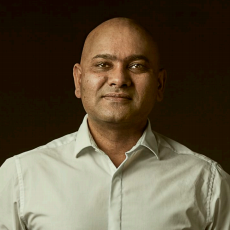
professor profile picture

Yeshpal Singh

Professor at University of Birmingham

University of Birmingham

Country flag

United Kingdom

Has open position

This profile is automatically generated from trusted academic sources.

Google Scholar

.

ORCID

.

LinkedIn

Social connections

How do Nigerian students reach out?

Sign in for free to see their profile details and contact information.

Meet Kite AI

Contact this professor

Send an email
LinkedIn
ORCID
Google Scholar

Research Interests

Condensed Matter Physics

20%

Quantum Mechanics

30%

Physics

100%

Experimental Physics

80%

Quantum Optics

70%

Metrology

60%

Atomic Physics

60%

Ask ApplyKite AI

Start chatting
How can you help me contact this professor?
What are this professor's research interests?
How should I write an email to this professor?

Positions10

Publisher
source

Yeshpal Singh

University Name
.

University of Birmingham

PhD Studentship: Superradiance and Subradiance States in an Entangled Ensemble of Sr Atoms in a 3D Optical Lattice

[Fully funded PhD studentship.] This fully funded PhD studentship at the University of Birmingham offers an exciting opportunity to investigate superradiance and subradiance states in an entangled ensemble of strontium atoms within a 3D optical lattice. The project explores collective quantum effects arising from strong interactions among atoms, focusing on phenomena where emission is either enhanced (superradiance) or inhibited (subradiance) due to quantum interference. These effects are central to quantum optics and have significant implications for quantum information storage and processing, as subradiant dark states can be harnessed for advanced quantum technologies. As a PhD student, you will join a dynamic research group led by Professor Yeshpal Singh, working alongside experienced postdoctoral researchers and fellow PhD students. The group is equipped with state-of-the-art facilities for experimental atomic physics, providing an excellent environment for hands-on research and collaboration. The project aims to extend current studies to three-dimensional optical lattices, pushing the boundaries of quantum control and manipulation in ultracold atomic systems. Applicants should have a strong background in physics or a closely related field, with a keen interest in quantum optics, atomic physics, or experimental physics. The position is fully funded, covering tuition fees and providing a stipend for living expenses. The application deadline is 16 April 2026, and interested candidates are encouraged to contact Professor Yeshpal Singh ([email protected]) for further information about the project and application process. To apply, visit the University of Birmingham application portal and submit all required documents before the deadline. This studentship is ideal for candidates seeking to advance their expertise in quantum science and contribute to cutting-edge research in atomic and optical physics.

just-published

Publisher
source

Yeshpal Singh

University Name
.

University of Birmingham

PhD Studentship: Redefinition of SI Second Using Optical Clocks

[Fully funded PhD studentship.] This fully funded PhD studentship at the University of Birmingham offers an exciting opportunity to contribute to the redefinition of the SI second using state-of-the-art optical clocks. Optical clocks represent the pinnacle of precision measurement, surpassing traditional microwave clocks by orders of magnitude. The current definition of the SI second relies on the cesium hyperfine transition in the microwave domain, but advances in optical clock technology have prompted a global effort to redefine the SI second based on optical transitions. As a PhD student, you will join a dynamic research group engaged in developing and comparing ensembles of optical clocks, both stationary and transportable, as part of a collaborative network spanning the UK and Europe. The project involves experimental work in atomic physics, quantum optics, and precision instrumentation, with applications in fundamental physics and international timekeeping standards. You will work alongside experienced postdoctoral researchers and fellow PhD students, gaining hands-on experience with cutting-edge laboratory equipment and techniques. The position is fully funded, covering tuition fees and providing a stipend. Applicants should have a strong background in physics or a closely related field, with a keen interest in experimental research and precision measurement. The ability to work collaboratively and communicate effectively within a multidisciplinary team is essential. The application deadline is 16 April 2026. Prospective candidates are encouraged to apply online via the University of Birmingham portal and may contact Professor Yeshpal Singh ([email protected]) for further information about the project and application process. This studentship is ideal for those passionate about advancing the frontiers of timekeeping and metrology through innovative research in optical clocks.

just-published

Publisher
source

Yeshpal Singh

University Name
.

University of Birmingham

PhD Studentship: Chronometric Levelling with Transportable Optical Lattice Clocks

[Fully funded PhD studentship.] This fully funded PhD studentship at the University of Birmingham focuses on chronometric levelling using transportable optical lattice clocks. Chronometric levelling is a cutting-edge technique in precision measurement, enabling geodetic applications at centimeter-level accuracy by leveraging the extraordinary frequency stability of optical clocks. Conventional geodetic methods have reached their limits, but optical clocks, especially those designed for transportability, offer unprecedented uncertainty levels down to 1x10 -18 . This project aims to push the boundaries of direct clock comparison and chronometric levelling, utilizing advanced fibre links that connect UK and EU continental optical clocks. As a PhD student, you will join a dynamic research group comprising experienced postdoctoral researchers and fellow PhD students, working in state-of-the-art laboratories equipped for high-precision experimental physics. The project will involve hands-on work with optical lattice clocks, frequency metrology, and quantum optics, as well as collaboration with international partners through the fibre-linked clock network. You will contribute to the development and deployment of transportable optical clock setups, participate in direct clock comparison experiments, and help advance the field of geodetic measurement. The University of Birmingham offers a vibrant academic environment and access to world-class research facilities. The studentship provides full funding, including tuition fees and a stipend, making it an excellent opportunity for candidates passionate about experimental physics and precision measurement. Applicants should have a strong background in physics or a closely related discipline, with a keen interest in quantum optics, atomic clocks, or metrology. International candidates are welcome and may need to demonstrate English language proficiency. The application deadline is 16 April 2026. Interested candidates should apply online via the university's application portal and are encouraged to contact Professor Yeshpal Singh ([email protected]) for further information about the position and research group. This is a unique opportunity to contribute to the future of precision timekeeping and geodetic science in a collaborative and innovative setting.

just-published

Publisher
source

Yeshpal Singh

University Name
.

University of Birmingham

PhD Studentship: Bose-Einstein Condensate of Strontium Atoms

[Fully funded PhD studentship.] The University of Birmingham invites applications for a fully funded PhD studentship focused on the realisation of a Bose-Einstein Condensate (BEC) of strontium atoms. This project is part of a new experimental initiative aiming to achieve BECs of the strontium 84 isotope using advanced optical dipole trap techniques. In a BEC, atoms occupy a single quantum state, resulting in unique macroscopic quantum phenomena observable as sharp peaks in both momentum and position space. As a PhD student, you will join a dynamic research group comprising experienced postdoctoral researchers and fellow PhD students, working in state-of-the-art laboratory facilities. The project will involve hands-on experimental work, including the setup and optimisation of optical dipole traps, laser cooling, and the study of ultracold atomic gases. You will gain expertise in quantum optics, atomic physics, and advanced laboratory techniques, contributing to cutting-edge research in condensed matter and quantum physics. The position is fully funded, covering tuition fees and providing a stipend for living expenses. The successful candidate will have access to world-class resources and mentorship from Professor Yeshpal Singh, an expert in the field. Applicants should possess a strong academic background in physics, with a preference for those who have experience in experimental physics, quantum mechanics, or atomic physics. Laboratory skills, familiarity with optics, and knowledge of laser cooling are advantageous. International candidates may be required to demonstrate English language proficiency. The application deadline is 16 April 2026. Interested candidates should apply online via the University of Birmingham application portal and are encouraged to contact Professor Yeshpal Singh ([email protected]) for further information about the project and application process.

just-published

Publisher
source

Yeshpal Singh

University Name
.

University of Birmingham

PhD Studentship: Measurement of The Variation of Alpha Using a Network of Optical Clocks

[Fully funded PhD studentship.] This fully funded PhD studentship at the University of Birmingham offers an exciting opportunity to investigate the time variation of the fine structure constant, Alpha, using a network of state-of-the-art optical clocks. Optical clocks are among the most precise instruments ever developed, enabling researchers to perform highly accurate measurements of fundamental constants. The project aims to compare frequencies of different optical clocks, or different transitions within the same clock, to set precise bounds on the time variation of Alpha. Detecting any change in Alpha would have profound implications, potentially revealing physics beyond the Standard Model and shedding light on the origins and evolution of the Universe, including the Big Bang, matter formation, and cosmic expansion. The research group has established a collaborative network of optical clocks across the UK and Europe, providing a unique platform for fundamental physics studies. As a PhD student, you will join a dynamic team of postdoctoral researchers and fellow PhD students, working at the forefront of experimental physics and quantum metrology. The project is supervised by Professor Yeshpal Singh, an expert in precision measurement and optical clock technology. Applicants should possess a strong background in physics, with a keen interest in experimental techniques, precision measurement, and quantum technologies. Experience with optical clocks or related instrumentation is advantageous but not essential. The studentship covers full tuition fees and provides a stipend, ensuring financial support throughout your doctoral studies. The application deadline is 16 April 2026. Prospective candidates are encouraged to apply online via the University of Birmingham application portal and may contact Professor Yeshpal Singh ([email protected]) for further information about the project or funding details. This position is ideal for students passionate about fundamental physics and eager to contribute to groundbreaking research in precision measurement and the study of universal constants.

just-published

Publisher
source

Yeshpal Singh

University Name
.

University of Birmingham

PhD Studentship: Bose-Einstein Condensate of Strontium Atoms

[Fully funded PhD studentship covering tuition and stipend.] The University of Birmingham is offering a fully funded PhD studentship focused on the realisation of Bose-Einstein Condensate (BEC) of strontium atoms. This exciting opportunity is part of a new experimental project aiming to achieve BECs of the strontium 84 isotope using optical dipole traps, which provide a faster and more efficient route to BEC formation. The research will explore macroscopic quantum phenomena, where atoms fill a single quantum state, resulting in distinctive peaks in both momentum and position space. As a PhD student, you will join a vibrant research team comprising postdoctoral researchers and fellow PhD students, working in state-of-the-art facilities. The project is led by Professor Yeshpal Singh, an expert in quantum and atomic physics. You will gain hands-on experience with advanced experimental techniques, including laser cooling, optical trapping, and quantum state manipulation. The research has broad implications for condensed matter physics, quantum mechanics, and the study of ultracold atoms. The studentship is fully funded, covering tuition fees and a stipend for living expenses. Applicants should have a strong academic background in physics or a closely related field, with a bachelor's or master's degree. Experience in quantum physics, atomic physics, or experimental physics is highly desirable, as is familiarity with laboratory work and optical trapping methods. English language proficiency must meet the University of Birmingham's requirements. The application deadline is 16 April 2026. Interested candidates should apply online via the University of Birmingham application portal and are encouraged to contact Professor Yeshpal Singh ([email protected]) for further information about the project and application process. Prepare your academic transcripts and a statement of research interest to support your application. This studentship offers an excellent opportunity to contribute to cutting-edge research in quantum physics and to develop advanced experimental skills in a collaborative academic environment.

just-published

Publisher
source

Yeshpal Singh

University Name
.

University of Birmingham

PhD Studentship: Redefinition of SI Second Using Optical Clocks

[Fully funded PhD studentship.] This fully funded PhD studentship at the University of Birmingham offers an exciting opportunity to contribute to the redefinition of the SI second using optical clocks. Optical clocks represent the most precise instruments ever developed, enabling advances in fundamental physics and precision measurement. Currently, the SI second is defined by the Cs hyperfine transition in the microwave domain (~9.2GHz), but optical clocks have surpassed microwave clocks in performance by at least two orders of magnitude. The project aims to drive the transition to an optical clock-based definition of the SI second, a major milestone in metrology and timekeeping. The research involves comparing ensembles of optical clocks, forming networks across the UK and Europe, and developing transportable optical clocks within the laboratory. Transportable optical clocks are expected to play a crucial role in the redefinition process, enabling comparisons and collaborations across institutions. The successful candidate will join a dynamic team of postdoctoral researchers and PhD students, working at the forefront of precision measurement and quantum optics. Applicants should have a strong background in physics or a closely related discipline, with a good undergraduate degree (first or upper second class). Experience or interest in atomic physics, quantum optics, instrumentation, or precision measurement is highly desirable. The position is fully funded, covering tuition and stipend, and offers access to state-of-the-art facilities and collaborative networks. The application deadline is 16 April 2026. Interested candidates should apply online via the University of Birmingham application portal and may contact Professor Yeshpal Singh ([email protected]) for further information. This studentship is ideal for those passionate about advancing the science of timekeeping and contributing to a fundamental change in international standards.

just-published

Publisher
source

Yeshpal Singh

University Name
.

University of Birmingham

PhD Studentship: Chronometric Levelling with Transportable Optical Lattice Clocks

[Fully funded PhD studentship.] This fully funded PhD studentship at the University of Birmingham focuses on chronometric levelling using transportable optical lattice clocks. Chronometric levelling is a cutting-edge application in precision measurement, requiring optical clocks with relative frequency inaccuracies at the level of 1x10 -18 . Conventional geodetic methods have reached their limits, but optical clocks—especially transportable setups—offer the potential to surpass these limitations and achieve centimetre-level precision. The project aims to demonstrate direct clock comparison for chronometric levelling, leveraging fibre links that connect UK and EU continental optical clocks. As a PhD student, you will join a dynamic research team comprising postdoctoral researchers and fellow PhD students, working in state-of-the-art facilities. The research environment is highly collaborative, offering opportunities to engage with advanced experimental setups and contribute to the development of next-generation time standards. Applicants should have a strong academic background in physics or a closely related discipline, with particular interest or experience in precision measurement, quantum optics, or atomic physics. The studentship is fully funded, covering tuition and stipend. For further details, you are encouraged to contact Professor Yeshpal Singh ([email protected]). The application deadline is 16 April 2026. To apply, visit the University of Birmingham application portal and review the eligibility requirements. This opportunity is ideal for students seeking to advance their expertise in experimental physics, metrology, and quantum technologies within a leading UK research institution.

just-published

Publisher
source

Yeshpal Singh

University Name
.

University of Birmingham

PhD Studentship: Superradiance and Subradiance States in an Entangled Ensemble of Sr Atoms in a 3D Optical Lattice

[Fully funded PhD studentship.] This fully funded PhD studentship at the University of Birmingham offers an exciting opportunity to investigate superradiance and subradiance states in an entangled ensemble of strontium atoms within a 3D optical lattice. The project focuses on quantum effects arising from strong interactions among atoms, where superradiance leads to enhanced emission through constructive interference, and subradiance results in inhibited emission via destructive interference. These phenomena are central to quantum optics and have significant implications for quantum information processing, including the creation of dark states for quantum storage. As a PhD student, you will join a dynamic research group comprising postdoctoral researchers and fellow PhD students, working with state-of-the-art facilities. The research aims to explore collective atomic responses, extend studies to 3D lattices, and advance understanding of quantum emission behaviors. The project is ideal for candidates with a strong background in physics, particularly those interested in quantum optics, atomic physics, and experimental research. The studentship is fully funded, covering tuition and stipend. Applicants should hold a good undergraduate degree in physics or a related discipline, with laboratory experience and familiarity with quantum mechanics considered advantageous. English language proficiency may be required for international applicants. The application deadline is 16 April 2026. To apply, submit your application via the University of Birmingham portal and contact Professor Yeshpal Singh ([email protected]) for further information. This position provides a unique opportunity to contribute to cutting-edge research in quantum physics and atomic ensembles, with potential impact on quantum information technologies.

just-published

Publisher
source

Yeshpal Singh

University Name
.

University of Birmingham

PhD Studentship: Measurement of The Variation of Alpha Using a Network of Optical Clocks

[Fully funded PhD studentship.] This fully funded PhD studentship at the University of Birmingham offers an exciting opportunity to investigate the time variation of the fine structure constant, Alpha, using a network of optical clocks. Optical clocks are among the most precise instruments ever developed, enabling researchers to probe fundamental constants with unprecedented accuracy. The project aims to compare frequencies across different optical clocks, or transitions within the same clock, to set precise bounds on the variation of Alpha—a change that could signal physics beyond the Standard Model and reveal new insights into the origins and evolution of the Universe, including the Big Bang, matter formation, and cosmic expansion. The research group has established a collaborative network of optical clocks across the UK and Europe, providing a unique platform for fundamental physics studies. As a PhD student, you will join a vibrant team of postdoctoral researchers and fellow PhDs, working at the forefront of quantum metrology and experimental physics. The project is supervised by Professor Yeshpal Singh, an expert in the field, who can be contacted for further information at [email protected]. Applicants should possess a strong academic background in physics, ideally with experience or interest in fundamental physics, precision measurement, or quantum metrology. While prior experience with optical clocks or experimental techniques is advantageous, it is not mandatory. The studentship covers full tuition and provides a stipend, ensuring financial support throughout your doctoral studies. The application deadline is 16 April 2026. Interested candidates should apply online via the University of Birmingham's application portal and are encouraged to reach out to Professor Singh for guidance or questions. This position is ideal for students passionate about fundamental physics and eager to contribute to cutting-edge research in precision measurement and the study of universal constants.

just-published