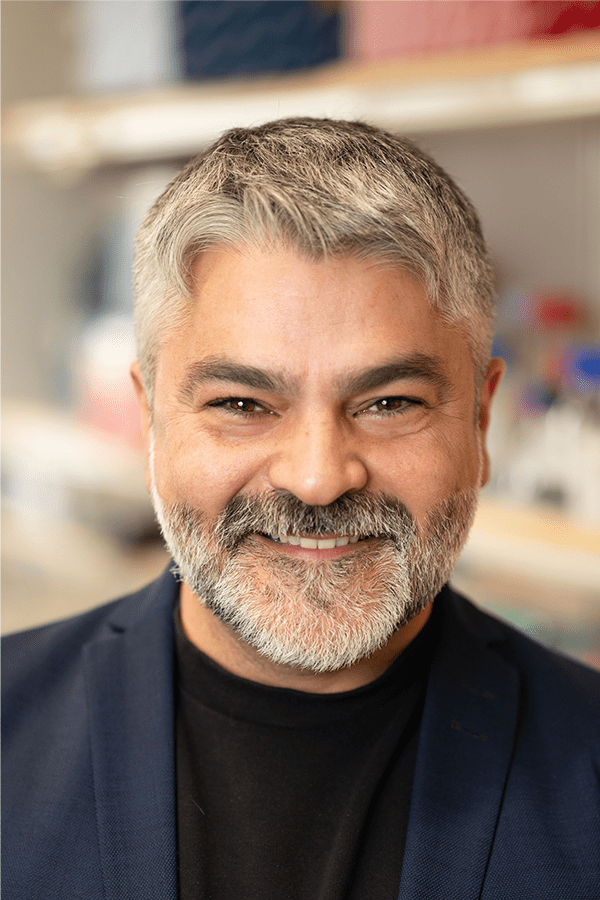
professor profile picture

Eduardo Villablanca

Professor at Karolinska Institutet

Karolinska Institutet

Country flag

Sweden

This profile is automatically generated from trusted academic sources.

Google Scholar

.

ORCID

.

LinkedIn

Social connections

How do Vietnamese students reach out?

Sign in for free to see their profile details and contact information.

Meet Kite AI

Contact this professor

Research Interests

Immunology

100%

Microbiology

20%

Mucosal Biology

50%

Host-microbiota Interaction

40%

Mucosal Immunology

40%

Inflammatory Bowel Disease

40%

Biology

40%

Ask ApplyKite AI

Start chatting
How can you help me contact this professor?
What are this professor's research interests?
How should I write an email to this professor?

Recent Grants

Grant: Close

Utbildning av leukocyter i magtarmkanalen i hälsa och sjukdom

Open Date: 2015-01-01

Close Date: 2018-12-31

Grant: Close

Role of retinoic acid in dendritic cell 'education' in the gut: Implications for tolerogenic mucosa

Open Date: 2010-07-01

Close Date: 2013-06-30

Positions5

Publisher
source

Karolinska Institutet

Karolinska Institutet

PhD Position in Spatial Transcriptomics, Bioinformatics, and Mucosal Immunology at Karolinska Institutet

A fully funded PhD position is available at Karolinska Institutet in Sweden, within the internationally recognized Villablanca Lab. The research focuses on spatial transcriptomics, mucosal immunology, computational biology, and advanced models of inflammatory bowel disease (IBD). The successful candidate will contribute to cutting-edge research by building spatial atlases, integrating multi-omics data, and analyzing single-cell datasets to understand the mechanisms of mucosal healing in ulcerative colitis and other inflammation models. The lab’s interdisciplinary program combines experimental models (zebrafish and mouse), molecular and cellular methods, state-of-the-art technologies (scRNA-seq, spatial transcriptomics), system biology, and clinical samples. The overarching goal is to define the complex host–environment interactions that maintain intestinal homeostasis, investigate how disruptions lead to IBD, and develop strategies for mucosal regeneration and future therapies. The PhD project will integrate spatial transcriptomics, proteomics, and metabolomics in both animal models and human tissue, aiming to identify key regulators of mucosal regeneration and map conserved and species-specific healing mechanisms. Karolinska Institutet offers a creative, international, and inspiring environment with successful medical research and the largest range of medical education in Sweden. As a doctoral student, you will have access to an individual research project, a skilled supervisor, a wide selection of courses, and the opportunity to work in a successful research group. International collaborations and exchanges are possible through KI’s global partnerships. Eligibility requirements include a master’s degree in bioinformatics or computational biology, documented experience in intestinal immunology, spatial transcriptomics, single-cell RNA sequencing, and bioinformatics, as well as proficiency in Python, R, and bash. Experience with pre-clinical and clinical data, murine models for colitis and colorectal cancer, and mass spectrometry is advantageous. Candidates must demonstrate strong English language skills, independence, teamwork, creativity, motivation, and the ability to present and analyze data. All eligibility must be documented as per Karolinska Institutet’s requirements. The position is fully funded for up to 4 years, with a contractual salary, free access to fitness facilities, and compensation for medical care. The application deadline is December 10, 2025. To apply, submit your application via the Varbi recruitment system, including a personal letter, CV, degree certificates, publications, and documents demonstrating required skills and eligibility. Applications can be in English or Swedish. For further information, contact Professor Eduardo Villablanca at [email protected]. For more details, visit the official job posting and supervisor’s academic page: Job Posting Eduardo Villablanca Academic Profile

3 months ago

Publisher
source

Karolinska Institutet

Karolinska Institutet

PhD Position in Spatial Transcriptomics, Bioinformatics, and Mucosal Immunology at Karolinska Institutet

Karolinska Institutet, one of the world’s leading medical universities, is offering a fully funded PhD position in the Villablanca Lab, renowned for its research in mucosal immunology and spatial omics. The doctoral project is highly interdisciplinary, integrating spatial transcriptomics, bioinformatics, computational biology, and advanced models of inflammatory bowel disease (IBD) using mouse and zebrafish. The research aims to build functional spatial atlases of intestinal healing in ulcerative colitis by combining spatial transcriptomics, proteomics, and metabolomics, working with both pre-clinical models and clinical samples. The successful candidate will analyze single-cell and spatial omics datasets, design experiments, and publish in top journals, collaborating within an international and interdisciplinary environment. The Villablanca Lab focuses on understanding the spatial organization of inflammation and healing in the gut, defining host–environment interactions that maintain intestinal homeostasis, and exploring how disruptions can lead to IBD. The lab employs cutting-edge technologies such as scRNA-seq, spatial transcriptomics, and system biology approaches, and maintains collaborations in host–microbe interactions and spatial technologies. Applicants must hold a master’s degree in bioinformatics or computational biology, with documented experience in intestinal immunology, spatial transcriptomics, single-cell RNA sequencing, and bioinformatics. Proficiency in Python, R, and bash is essential, as is experience analyzing single-cell and spatial transcriptomics data in ulcerative colitis and IBD contexts. Familiarity with murine models for colitis and colorectal cancer is required, and mass spectrometry experience is advantageous. Candidates should demonstrate strong English skills, data analysis and presentation abilities, creativity, motivation, independence, and teamwork. The position offers a contractual salary for up to 4 years full-time, access to fitness facilities, and reimbursement for medical care. Karolinska Institutet provides a creative, international research environment with opportunities for collaboration and exchange. Applications should be submitted via the Varbi recruitment system, including a personal letter, CV, degree certificates, publications, and documents demonstrating eligibility and skills. The deadline for applications is December 10, 2025. For more information, visit the academic profile of Professor Eduardo Villablanca or the official job posting. This opportunity is ideal for candidates passionate about spatial omics, immunology, and computational biology, seeking to contribute to cutting-edge research in intestinal health and disease.

3 months ago

Publisher
source

Eduardo Villablanca

University Name
.

Karolinska Institutet

Postdoctoral studies in Gut-Driven Mechanisms of Extraintestinal Disease (scholarship)

This postdoctoral scholarship at Karolinska Institutet offers an exciting opportunity to investigate gut-driven mechanisms of extraintestinal disease, focusing on the transcriptomic landscape of intestinal tissue regeneration and its implications for conditions such as inflammatory bowel disease (IBD), colorectal cancer (CRC), and autoimmune diseases like multiple sclerosis. The research integrates CRISPR-based functional genomics, metabolomic profiling, and advanced immunological techniques to study immune–epithelial crosstalk during inflammation and tissue repair, using both experimental models and patient-derived materials. The position is based in the laboratory of Associate Professor Eduardo Villablanca, a leader in mucosal immunology, within the Department of Medicine, Solna, at the Immunology and Allergy division. The group employs cutting-edge technologies, including single-cell and spatial transcriptomics, to understand how intestinal homeostasis is maintained and disrupted. The research environment is multidisciplinary, with close collaborations between clinicians, experimentalists, and bioinformaticians, and access to state-of-the-art facilities at one of the world's leading medical universities. The successful candidate will work on projects involving IL-17 biology, immunometabolism, CRISPR-based functional genomics, and translational inflammation research. Duties include data quality control, management, and archival storage; analysis of high-parameter flow cytometry; preparation of cell suspensions; in vivo models; and support for ongoing research, paper writing, and grant applications. The role also involves shaping and maintaining the group's computing resources, with an interest in machine learning approaches considered advantageous. Applicants must have a Ph.D. or M.D./Ph.D. in immunology or computational biology, with a strong background in gamma delta cell biology, immunometabolism, epigenetic regulation, and statistical/computational biology. Extensive experience with in vivo mouse models, immune cell isolation, high-parameter flow cytometry, Seahorse-based metabolic assays, chromatin immunoprecipitation, and transcriptional analyses is required. A strong publication record and fluency in English are essential. The scholarship is open only to foreign researchers who have not previously studied or resided in Sweden. The scholarship is tax-free, granted for up to two years (in twelve-month periods, paid every six months), and aims to promote internationalization and research qualification after a doctorate. The application must be submitted via the Varbi recruitment system and include a CV, publication list, and a summary of current work. For more information about the research group, visit the group website . The application deadline is April 15, 2026.

just-published

Publisher
source

Eduardo Villablanca

University Name
.

Karolinska Institutet

Postdoctoral Researcher in Single-Cell, Spatial, and Host-Microbiome Computational Biology

This postdoctoral position at Karolinska Institutet offers an exciting opportunity to advance research in single-cell, spatial, and host-microbiome computational biology. The successful candidate will join the laboratory of Professor Eduardo Villablanca, a leading group in mucosal immunology and intestinal homeostasis, within the Department of Medicine, Solna. The research focuses on intestinal tissue regeneration, mucosal inflammation, and host-microbiome interactions, leveraging advanced technologies such as single-cell RNA-seq, spatial transcriptomics, and spatial metatranscriptomics (SmT). The project integrates experimental models, patient-derived materials, and cutting-edge transcriptomic approaches to investigate mechanisms underlying inflammatory bowel disease (IBD), colorectal cancer (CRC), and tissue repair. The postdoctoral researcher will develop and apply computational pipelines for the analysis and integration of bulk and single-cell RNA-seq, spatial omics, and host-microbiome data. Responsibilities include data quality control, preprocessing, management, annotation, visualization, and downstream statistical modeling, as well as method development for multi-sample integration and spatial niche analysis. Applicants should have a PhD in computational biology, bioinformatics, systems biology, immunology, genomics, computer science, computational medicine, or a related field. Essential qualifications include hands-on experience in transcriptomics (single-cell, spatial, metatranscriptomics), host-microbiome analysis, strong programming skills in R and/or Python, and experience with Linux and high-performance computing environments. Excellent English communication skills are required. Additional strengths include experience in intestinal biology, mucosal immunology, IBD, CRC, tissue regeneration, multi-omics integration, advanced statistics, machine learning, and collaborative research. Candidates should have completed their PhD within the last three years, though exceptions may be made for special circumstances. Karolinska Institutet is one of the world's leading medical universities, offering a creative and collaborative research environment with extensive expertise in medicine and health. The position is full-time and fully funded, with benefits provided through the university's collective agreement. The research group is located at the Division of Immunology and Respiratory Medicine, and more information about the group can be found at this link . To apply, submit your application through the Varbi recruitment system by April 15, 2026. Required documents include a PhD certificate, complete resumé, list of publications, and a summary of current work. All documents must be in English or Swedish. For further information, contact Professor Eduardo Villablanca at [email protected].

just-published

Articles14

Collaborators21

Xesus Abalo

KTH Royal Institute of Technology

SWEDEN

Ludvig Larsson

KTH Royal Institute of Technology

SWEDEN

Emma Ringqvist

Karolinska Institutet

SWEDEN

Antonio Rothfuchs

Karolinska Institutet

SWEDEN

Christian U. Riedel

-

GERMANY

Johan Botling

Associate professor

Uppsala University

SWEDEN

Jan Niess

Prof.

University of Basel

SWITZERLAND

Claudia Cavelti-Weder

Leitende Ärztin (chief of service)

University Hospital of Zurich

SWITZERLAND

Emma Wincent

Karolinska Institutet

SWEDEN

Chiara Sorini

Karolinska Institutet

SWEDEN

Xiaogang Feng

Karolinska Institutet

SWEDEN

Tim Willinger

Karolinska University Hospital

SWEDEN

Rodrigo Alonso Morales Castro

Karolinska Institutet

SWEDEN

Jonathan Coquet

Karolinska Institutet

SWEDEN

Nicola Gagliani

University Medical Center Hamburg-Eppendorf

GERMANY

Prisca Liberali

Assistant Professor

Friedrich Miescher Institute for Biomedical Research

SWITZERLAND

Marc Lecuit

Université Paris Cité

FRANCE

Yu GAO

Karolinska Institutet

SWEDEN

Danijela Matic vignjevic

INSERM

FRANCE

Maria L. Balmer

-

SWITZERLAND

Dhifaf Sarhan

Associate Professor

Karolinska Institutet

SWEDEN