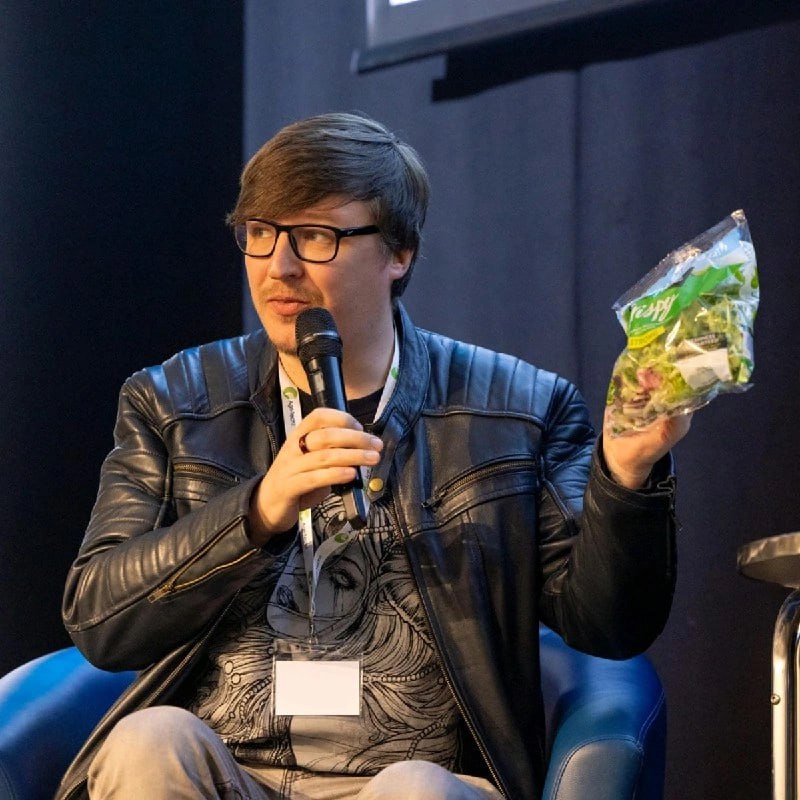
professor profile picture

Luke Bell

Lecturer in Molecular Horticulture; Handling Editor for the Journal of Food Composition & Analysis at University of Reading

University of Reading

Country flag

United Kingdom

Has grant

This profile is automatically generated from trusted academic sources.

Google Scholar

.

ORCID

.

LinkedIn

Social connections

How do Vietnamese students reach out?

Sign in for free to see their profile details and contact information.

Meet Kite AI

Contact this professor

LinkedIn
ORCID
Google Scholar

Research Interests

Botany

20%

Crop Science

60%

Plant Biology

30%

Plant Biochemistry

30%

Phytochemical

20%

Plant-soil Interaction

20%

Plant Breeding

20%

Ask ApplyKite AI

Start chatting
How can you help me contact this professor?
What are this professor's research interests?
How should I write an email to this professor?

Recent Grants

Grant: Close

Impact of peat free growing systems on the physical, nutritional, and sensory quality of Brassicas

Open Date: 2022-01-01

Close Date: 2026-01-01

Grant: Close

Reducing seed loss and waste in umbelliferous crops

Open Date: 2020-01-01

Close Date: 2024-01-01

Grant: Close

Understanding drought & heat stress tolerance in potato through use of multispectral imaging and soil amendment strategies

Open Date: 2019-10-01

Close Date: 2023-09-01

Grant: Close

Applying food science to inform diet choices and improve health

Open Date: 2019-04-01

Close Date: 2020-04-01

Grant: Close

Smart breeding for salad rocket

Open Date: 2016-09-30

Close Date: 2019-09-29

Positions1

Publisher
source

Luke Bell

University Name
.

University of Reading

PhD in Sustainable Food Systems: Silicon-Improved Leafy Kale (Biology, Chemistry, Food Science, Agriculture)

The University of Reading, in partnership with Cranfield University and Orion FT, is offering a fully funded PhD opportunity in Sustainable Food Systems, focusing on the Silicon-Improved Leafy Kale (SILK) project. This multidisciplinary research blends biology, chemistry, agronomy, and sensory science to address the challenge of food waste in kale, a nutrient-rich crop with a short shelf life and susceptibility to pests. The project aims to investigate the effects of silicon supplementation on kale’s pre- and post-harvest quality, including pest resistance, volatile organic compound (VOC) profiles, shelf life, and consumer preference. Research activities include glasshouse trials, insect feeding tests, advanced chemical analysis (GCxGC-TOF-MS), bioinformatics for gene expression, and sensory panels to evaluate consumer responses to treated kale. Supervision is provided by Dr James Ryalls (lead, University of Reading), Dr Lembe Magwaza (Cranfield University), Dr Luke Bell (University of Reading), and Ms Kate Finlayson (Orion FT). The project is part of the FoodBioSystems Doctoral Training Partnership, which brings together seven UK universities to develop scientists addressing sustainability, efficiency, and safety in food systems. Funding includes a full studentship with a tax-free stipend of £20,780/year (2025/26 rate), tuition coverage, and an industry placement with Orion FT. Applicants should have a background in biological sciences, agricultural sciences, food science, or chemistry, with interest or experience in agronomy, bioinformatics, or sensory science. To apply, candidates should visit the FoodBioSystems DTP website and submit their application online. For further information, contact the lead supervisor at [email protected]. The project offers advanced training, multidisciplinary research experience, and the opportunity to contribute to sustainable agriculture and food systems in the UK.

Articles9

Collaborators2

Robbie D. Girling

University of Reading

UNITED KINGDOM

James Blande

Professor

University of Eastern Finland

FINLAND