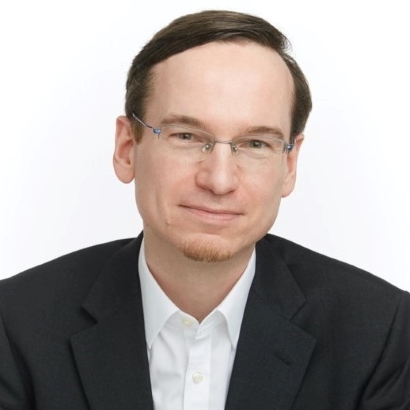
professor profile picture

Marcus Kaiser

Professor at School of Psychology

University of Nottingham

Country flag

United Kingdom

Has grant

This profile is automatically generated from trusted academic sources.

Google Scholar

.

ORCID

.

LinkedIn

Social connections

How do I reach out?

Sign in for free to see their profile details and contact information.

Continue in dashboard

Contact this professor

Send an email
LinkedIn
ORCID
Google Scholar
Academic Page

Research Interests

Computational Neuroscience

60%

Systems Neuroscience

90%

Neuroscience

100%

Neuroimaging

30%

Neuromodulation

30%

Cerebrovascular Physiology

20%

Psychophysiology

20%

Recent Grants

Grant: Close

Beyond drugs: Non-invasive focused ultrasound brain stimulation as a novel intervention for mental health

Open Date: 2021-09-30

Close Date: 2022-12-31

Grant: Close

Modelling dementia progression based on machine learning and simulations

Open Date: 2021-03-01

Close Date: 2022-08-30

Grant: Close

Modelling dementia progression based on machine learning and simulations

Open Date: 2019-03-31

Close Date: 2022-03-30

Grant: Close

Synthetic Portabolomics: Leading the way at the crossroads of the Digital and the Bio Economies

Open Date: 2016-05-11

Close Date: 2021-05-10

Grant: Close

Controlling Abnormal Network Dynamics with Optogenetics (CANDO)

Open Date: 2014-04-30

Close Date: 2021-04-29

Positions4

Publisher
source

Marcus Kaiser

University Name
.

University of Nottingham

Testing a Wearable Use-at-Home Device for Mental Health Conditions: Noninvasive Ultrasound Stimulation of the Auricular Branch of the Vagus Nerve

This fully funded PhD project at the University of Nottingham, in collaboration with the University of Birmingham, explores the use of a novel wearable device (Zenbud) for noninvasive ultrasound stimulation of the auricular branch of the vagus nerve to treat mental health conditions such as depression and anxiety. Brain stimulation is an established NICE-approved intervention for depression, but current methods like transcranial magnetic stimulation (TMS) require hospital-based administration, limiting accessibility and increasing costs. The Zenbud device offers a promising alternative, enabling at-home brain stimulation and potentially expanding treatment access to a wider patient population. Recent pilot studies using the Zenbud device have demonstrated significant reductions in anxiety symptoms (over 50% within three weeks) and improvements in depression scores among anxiety patients, with interventions delivered for just five minutes per day at home. This project will involve testing the device's outcomes by observing changes in mood and depression scores, as well as physiological effects such as heart rate variability. The student will also investigate patient experiences and work to identify optimal methods for delivering ultrasound vagus nerve stimulation. Depending on the project's outcomes, there will be opportunities to contribute to the design of future clinical trials, working across research centers at both the University of Nottingham and the University of Birmingham. The research areas span biomedical engineering, neuroscience, medical science, psychology, and machine learning, providing a multidisciplinary environment for the successful candidate. The position is supervised by Professor Marcus Kaiser (University of Nottingham), Dr. Paul Briley (University of Nottingham), and Professor Steven Marwaha (University of Birmingham). The studentship is funded by the Medical Research Council for four years and includes a stipend, tuition fees (for both home and international students), a laptop allowance, a research training and support grant (£5,000 per annum), and a travel allowance (£300 per annum). Applications are welcome from home, EU, and international candidates, though international recruitment is capped at 30% of the cohort. Applicants should have a strong academic background in biomedical engineering, medical science, neuroscience, or psychology. Experience in clinical research, medical devices, or mental health is advantageous. For further details and to apply, visit the MRC AIM website. The application deadline is 12:00 pm GMT on January 9, 2026. References supporting the research include recent studies on brain stimulation and neuromodulation for depression and anxiety, highlighting the scientific foundation and innovative nature of this project.

3 weeks ago

Publisher
source

Marcus Kaiser

University Name
.

University of Nottingham

Leveraging Population Activity Trajectories to Optimise Brain-Computer Interfaces for Arm Movement

Restoring the ability to move, walk, or communicate after nervous system injury is rapidly transitioning from science fiction to reality, thanks to advances in brain-computer interfaces (BCIs). These cutting-edge systems translate directly-recorded cortical activity into intended movement commands, leveraging artificial intelligence to bridge the gap between brain signals and physical actions. However, current BCIs are limited by their data and training requirements, lack of generalizability across tasks and individuals, and eventual failure as brain signals degrade over time. This PhD project at the University of Nottingham aims to revolutionize BCIs for arm movement by harnessing new insights into how motor cortex neural activity encodes intended movement. The research will involve analyzing multiple datasets of cortical recordings during arm movements, developing novel BCI algorithms that directly translate motor cortex encodings into movement commands, and testing these approaches for robustness and generalizability. As a student, you will gain hands-on experience with state-of-the-art neural activity data, learn advanced techniques for analyzing the relationship between neural signals and behavior, and receive training in dynamical systems analysis, recurrent neural network modeling, and AI-based decoding. The project is supervised by Professor Marcus Kaiser (lead supervisor), Dr. Paul Briley, and Professor Steven Marwaha, offering a multidisciplinary environment spanning neuroscience, biomedical engineering, and computational modeling. This opportunity is fully funded by the Medical Research Council, providing a 4-year studentship that covers tuition fees (for both home and international students), a stipend, laptop allowance, research training and support grant (£5,000 per annum), and travel allowance (£300 per annum). The position is open to applicants from the UK, EU, and internationally, with a cap on international recruitment at 30% of the cohort due to funding stipulations. Applicants should have or expect to obtain a first or upper second class degree in neuroscience, biomedical engineering, computer science, or a related field. Experience with data analysis, neural networks, or AI is highly desirable. For further details and to apply, visit the MRC AIM website. The application deadline is 12:00 pm GMT on January 9, 2026. References supporting the research include Drew (2022) Nature, Patrick-Krueger et al (2024) Nature Reviews Bioengineering, Colins-Rodriguez et al (2024) Journal of Neuroscience, and Zimnik & Churchland (2021) Nature Neuroscience. For project enquiries, contact Prof. Marcus Kaiser at [email protected]. Apply online and ensure all required documents are submitted before the deadline.

3 weeks ago

Articles12

Collaborators7

John O'Brien

Professor of Old Age Psychiatry

University of Cambridge

UNITED KINGDOM
View Details

Gavin Clowry

Reader in Neuroanatomy

Newcastle University

UNITED KINGDOM
View Details

Roman Bauer

Lecturer

University of Surrey

UNITED KINGDOM
View Details

Boubker Zaaimi

Aston University

UNITED KINGDOM
View Details

Michael Firbank

Newcastle University

UNITED KINGDOM
View Details

Vasileios Vavourakis

University College London

UNITED KINGDOM
View Details

Tracy D Farr

Associate Professor

University of Nottingham

UNITED KINGDOM
View Details