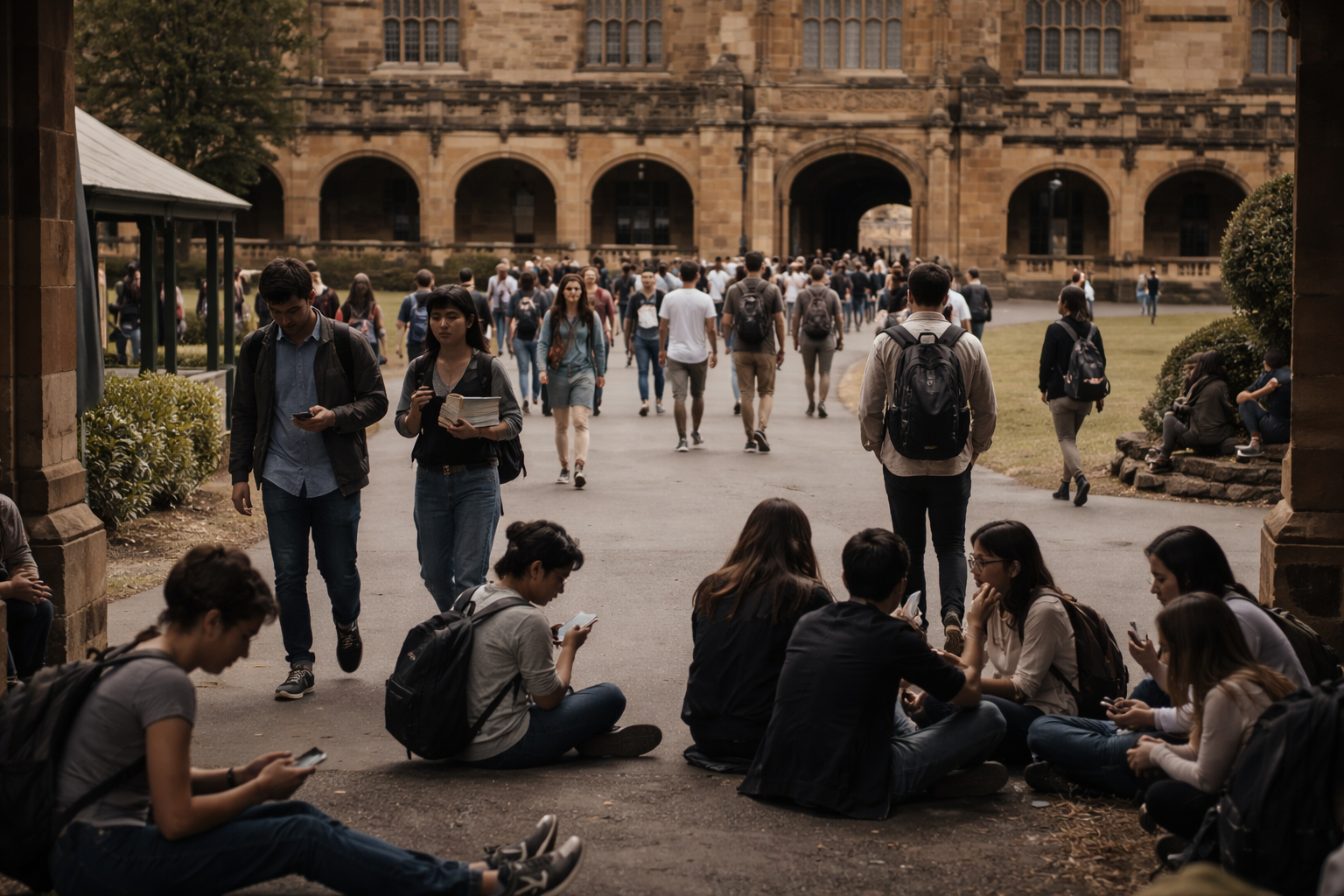
Australian universities face mounting criticism over declining education quality and soaring costs, threatening the country's reputation as a top study destination for international students.
The crisis, dubbed 'enshittification' by education experts, has emerged as universities prioritize profit over student experience. International students report falling satisfaction rates while facing record-high fees and living costs.

The Numbers Tell the Story
International student satisfaction scores have dropped 15% over the past three years across major Australian universities. Meanwhile, annual tuition fees now average AUD $45,000 for international undergraduates — up from $35,000 in 2020.
Universities have expanded class sizes to accommodate more fee-paying international students, leading to overcrowded lectures and reduced one-on-one time with professors. Some institutions now have international-to-domestic student ratios exceeding 60:40.
The housing crisis compounds these problems. Sydney and Melbourne rental costs have surged 30% since 2022, forcing many international students into substandard accommodation or financial hardship.
What This Means for International Students
If you're considering Australia for your studies, this news requires careful evaluation of your options.
Australia's universities still offer world-class research opportunities and globally recognized degrees. However, the value proposition has shifted dramatically. You'll pay premium prices while potentially receiving a diluted educational experience.
The good news? This crisis is forcing universities to compete more aggressively for quality international students. Scholarship opportunities are expanding, and some institutions are investing heavily in student services to rebuild their reputation.
Consider these factors when evaluating Australian programs:
Class sizes: Ask about student-to-faculty ratios in your specific program
Living costs: Budget at least AUD $25,000 annually for accommodation and living expenses
Support services: Prioritize universities with dedicated international student support teams
Looking for fully funded?
Discover PhD, Master's, and Postdoc positions tailored to your goals with ApplyKite's smart AI tools.
What You Should Do Now
Don't write off Australia entirely, but approach your decision strategically.
First, expand your search beyond the Group of Eight universities. Smaller institutions often provide better student-to-faculty ratios and more personalized attention while maintaining strong academic standards.
Second, thoroughly research accommodation options before accepting any offer. Contact current international students through university forums to get honest feedback about living conditions and costs.
Third, negotiate aggressively for scholarships. Universities desperate to maintain their international rankings are offering more generous financial aid packages than ever before.
Finally, consider timing your application for less popular intake periods. February intakes often have more scholarship availability and smaller class sizes than the crowded July intake.
Quick Facts: Australia Study Crisis
Average Annual Tuition | AUD $45,000 (international) |
Living Cost Increase | 30% since 2022 |
Satisfaction Drop | 15% over 3 years |
International Student Ratio | Up to 60% at some universities |
Alternative Strategies
Smart international students are adapting to this new reality by diversifying their applications.
Consider applying to both Australian universities and comparable programs in Canada or New Zealand, where costs remain lower and student satisfaction rates are more stable. This gives you negotiating power when scholarship offers arrive.
For PhD and postdoc candidates, Australia's research funding remains competitive despite undergraduate program issues. Focus on finding supervisors with active grants and strong publication records rather than relying solely on university rankings.
The key is thorough due diligence. Contact alumni working in your target field, join student Facebook groups, and request detailed breakdowns of all costs before making any commitments.
Australia's education system will likely stabilize as universities respond to this crisis, but current applicants must navigate carefully to ensure they receive value for their investment.