Summer Sale
Up to 30% off — ends 2 Aug
ONLY00h00m00s
Up to 30% off — ends 2 Aug
ONLY00h00m00s


Yevgeny Seldin
10 months ago
This position has expired. You can find similar positions from the section below or browse our positions listing pages.
Computer Science University of Copenhagen in Denmark
Degree Level
PhD
Field of study
Computer Science
Funding
Full funding availableDeadline
Expired

Country
Denmark
University
University of Copenhagen

How do I apply for this?
Sign in for free to reveal details, requirements, and source links.
Suggested positions



Keywords
Computer Science
Environmental Science
Mathematics
Algorithm Design
Online Learning
Reinforcement Learning
Environmental Sustainability
Generative Modeling
Resource Efficiency
Large Language Models
Machine learning
About this position
Funding details
Full funding including tuition fees and living expenses is available for this position. The scholarship covers all educational costs and provides a monthly stipend.
Ask ApplyKite AI
Start chatting
Can you summarize this position?
What qualifications are required for this position?
How should I prepare my application?
Professors

How do I apply for this?
Sign in for free to reveal details, requirements, and source links.
Application link: https://lnkd.in/g_6itXzP
Application deadline: 30 September 2025.
The five projects:
Green Computation Scheduling
Computation has become the backbone of modern society, but it consumes a considerable amount of energy. The project aims to reduce carbon emissions from computation by designing algorithms to schedule computation at times of low carbon intensity of the electricity supply. The challenge is that due to high intermittence of green energy sources and multitude of independent consumers, prediction of carbon intensity is challenging. Even if it was possible to predict the supply, independent attempts to exploit low carbon energy would lead to demand spikes, invalidating the predictions. We aim to address this challenge by building on recent advances in online and reinforcement learning in adversarial environments, and further advancing this field of research. Further details about the project are available here. Candidates applying for this position are expected to have solid theoretical background and mathematical skills. Background in online learning, bandits, and theoretical reinforcement learning is an advantage. The project will be supervised by Yevgeny Seldin and Raghavendra Selvan. For inquiries concerning this project, please, contact Yevgeny Seldin < [email protected] >.
Resource efficiency for generative AI
In this project, we will broadly investigate resource-efficient Large Language Models (LLMs) and their effect on the sustainability of AI. This can be at the level of developing novel algorithms, training, learning and prompting paradigms, or hardware optimization techniques that can result in reductions in the resources required when developing and deploying LLM pipelines.The interplay of resource efficiency with the broader sustainability of Generative AI (in terms of safety, fairness, and access) will be of particular interest. For more details about the project contact Christina Lioma < [email protected] >.
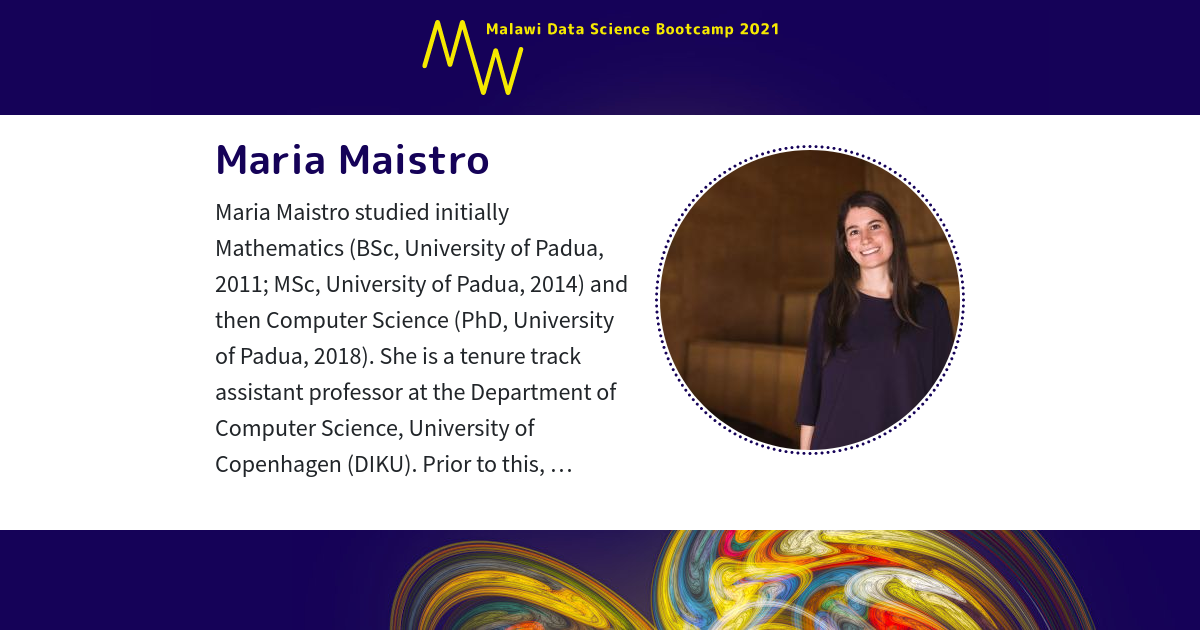
Candidates applying for this position must have strong skills in mathematics and ML, with a drive towards advancing the UN sustainable development goals. The project will be supervised by Christina Lioma, Maria Maistro and Raghavendra Selvan. For inquiries concerning this project, please, contact Christina Lioma < [email protected] >.