

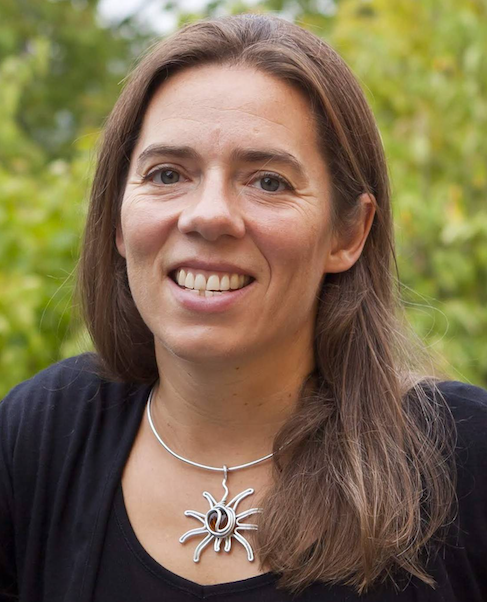
Sviatlana Lamaka
11 months ago
This position has expired. You can find similar positions from the section below or browse our positions listing pages.
PhD Position in Mechanistic Study of Corrosion in Additively Manufactured Biodegradable Mg and Zn Alloys (Print4Life MSCA Network) Helmholtz-Zentrum Hereon in Germany
Degree Level
PhD
Field of study
Chemistry
Funding
Available
Deadline
Expired

Country
Germany
University
Helmholtz-Zentrum Hereon

How do I apply for this?
Sign in for free to reveal details, requirements, and source links.
Suggested positions



Keywords
About this position
This PhD position is part of the EU-funded Print4Life Marie Skłodowska-Curie Doctoral Network, focusing on the mechanistic study of high corrosion susceptibility in additively manufactured biodegradable magnesium (Mg) and zinc (Zn) alloys. The host institution is Helmholtz-Zentrum Hereon in Geesthacht, Germany, with the PhD degree awarded by Kiel University (CAU). The Print4Life network brings together 8 host institutions and 6 partners across Europe, aiming to advance research in additive manufacturing of biomaterials and future tissue engineering.
The successful candidate will join a cohort of 17 doctoral students, with three based at Hereon, and will benefit from research stays at Uppsala Universitet (Sweden) and Hydrumedical (Portugal). The project centers on unraveling the origins of elevated corrosion rates in powder bed fusion laser beam (PBF-LB) manufactured Mg and Zn alloys, which are critical for biomedical applications due to their biodegradability. The research will employ advanced micro- and nanoscopic visualization techniques, including in situ SEM and TEM, EBSD, X-ray micro- and nano-tomography at DESY, and Scanning Kelvin Probe Force Microscopy (SKPFM), to study micro-galvanic activity and degradation performance.
Collaboration with Uppsala Universitet will enable the production and comparative study of various alloy compositions, while in vitro testing at Hydrumedical will assess the best-performing materials. The objectives are to identify the driving forces behind micro-galvanic corrosion, propose mitigation strategies, and experimentally validate the most promising approaches. Applicants must have a Master’s degree in a relevant field (materials science, biomedical engineering, chemistry, chemical engineering, materials engineering, engineering physics, or related), strong English skills, and ideally experience in electron microscopy, corrosion characterization, or additive manufacturing.
The position is fully funded for 36 months under the Marie Curie regulations, with a competitive salary and allowances. The application deadline is December 31st, 2025, and the expected start date is March 1st, 2026. The Hereon Institute of Surface Science provides a dynamic, interdisciplinary environment specializing in corrosion protection and functional coatings, with close integration of experimental and modeling approaches. This is an excellent opportunity for motivated candidates to contribute to cutting-edge research in materials science and biomaterials within a prestigious European network.
Funding details
Available
What's required
Applicants must not have a doctoral degree or be enrolled in a doctoral program at the date of recruitment and must comply with the MSCA mobility rule (not have resided or carried out main activity in Germany for more than 12 months in the 36 months prior to recruitment). A Master’s degree and documented experience in materials science, biomedical engineering, chemistry, chemical engineering, materials engineering, engineering physics, or a related field is required. Good oral and written English skills are mandatory. Advantageous qualifications include experience in electron microscopy (TEM, SEM), large data image treatment, corrosion characterization, local electrochemistry (SECM, SKPFM), and additive manufacturing of metals. Strong personal qualities such as independent work, goal orientation, focus under workload, teamwork, and academic writing are emphasized.
Ask ApplyKite AI
Professors
How do I apply for this?
Sign in for free to reveal details, requirements, and source links.