
Luca Vannucci
6 months ago
This position has expired. You can find similar positions from the section below or browse our positions listing pages.
PhD Position in Quantum Light Sources for Optical Quantum Computers at DTU Electro Technical University of Denmark in Denmark
Degree Level
PhD
Field of study
Electrical Engineering
Funding
Available
Deadline
Expired

Country
Denmark
University
Technical University of Denmark

How do I apply for this?
Sign in for free to reveal details, requirements, and source links.
Suggested positions






Keywords
About this position
Are you eager to contribute to the development of tomorrow’s quantum technologies? The Quantum Light Sources group at DTU Electro is seeking a talented and motivated PhD candidate to develop and characterize novel sources of quantum light for optical quantum computers. This research is at the forefront of quantum photonics, focusing on the design, modeling, fabrication, and testing of single-photon and entangled photon pair sources—essential components for optical quantum computers and quantum networks.
You will join a dynamic team of 10-12 researchers, including senior staff, postdocs, and PhD/Master students, working to establish the building blocks for future quantum technology. Your main responsibilities will include fabricating single-photon emitters and characterizing them in a state-of-the-art quantum-optical laboratory. The project involves working with quantum emitters in layered transition-metal dichalcogenides (TMDs) such as WSe2 and MoTe2, and semiconductor quantum dots (QDs) of the III-V group like GaAs and InGaAs.
Key tasks include building optical setups for device characterization at cryogenic temperatures, performing spectroscopy and optical imaging, advanced coherent excitation with picosecond laser pulses, and quantum-optical characterization using experiments such as Hanbury-Brown and Twiss and Hong-Ou-Mandel. You will present your results to the group, engage with the theoretical team, and co-supervise BSc and MSc student projects.
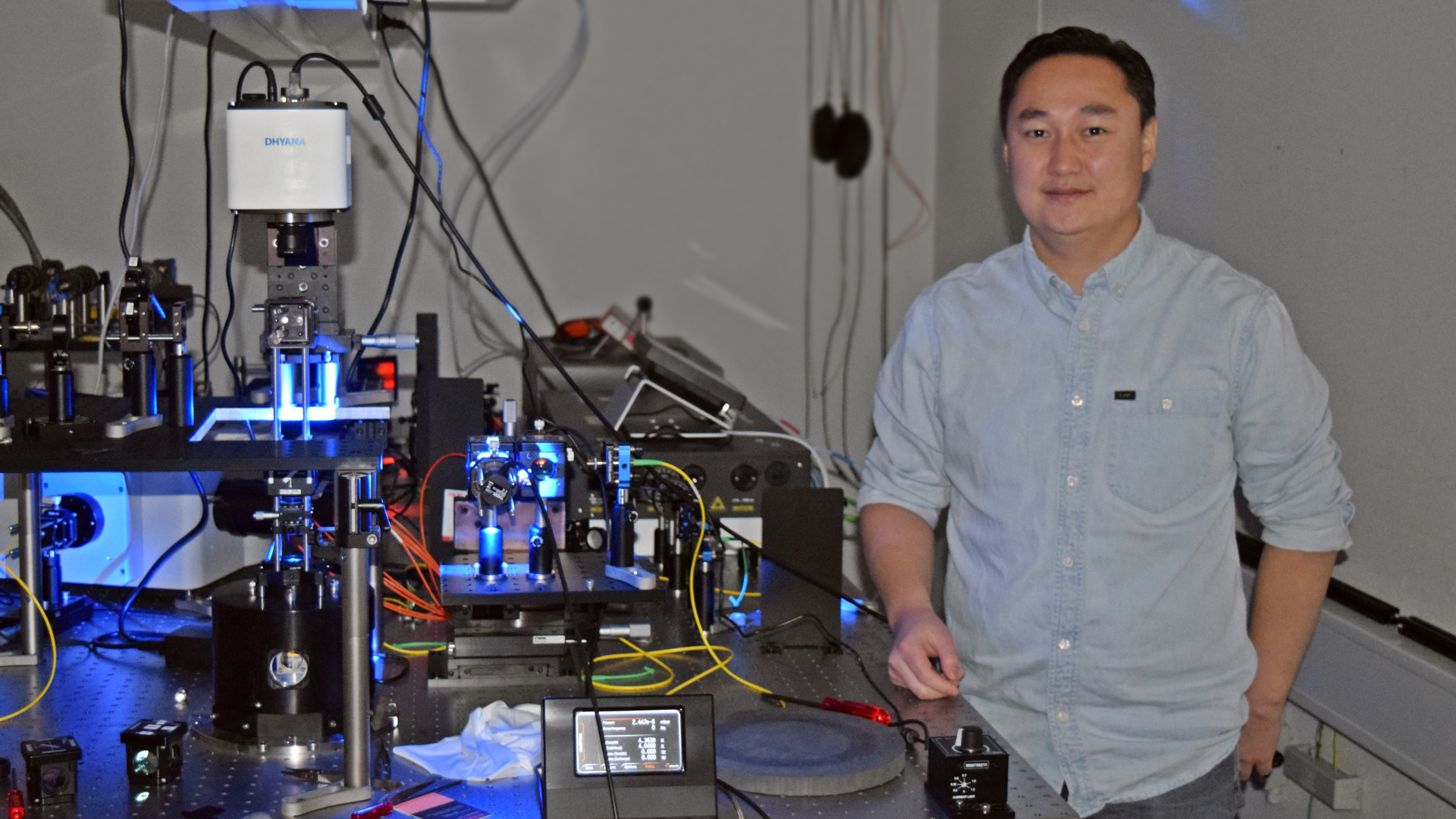
The laboratory is equipped with closed-cycle cryostats with nanopositioners, tunable femtosecond laser systems, spectrometers, and superconducting single-photon detectors. You will also have access to DTU’s cleanroom facilities and specialized imaging tools. Collaboration with the theoretical team is integral, as your experiments will test and challenge theoretical predictions.
As part of the Danish PhD program, you will take PhD courses, participate in teaching, conduct an external research stay, and disseminate your research through publications. The Department of Electrical and Photonics Engineering (DTU Electro) is a leading research environment with nearly 300 employees, specializing in nanophotonics, photonic nanotechnology, lasers, quantum photonics, optical sensors, LEDs, photovoltaics, ultra-high speed optical transmission systems, and bio-photonics.
DTU is globally recognized for research excellence, innovation, and scientific advice. The university offers a rewarding and challenging job in an international environment, striving for academic excellence and collegial respect. DTU has campuses across Denmark and Greenland and collaborates with top universities worldwide.
Eligibility: Applicants must have a two-year master's degree (120 ECTS points) or equivalent. Application materials must include a cover letter, CV, transcripts, diploma, publication list (if relevant), and one reference letter. Candidates may apply prior to obtaining their master's degree but cannot begin before having received it. All interested candidates irrespective of age, gender, disability, race, religion or ethnic background are encouraged to apply. Open-source background checks may be conducted due to research in critical technology.
Funding: The position is fully funded for 3 years, with salary and appointment terms based on the collective agreement with the Danish Confederation of Professional Associations. The allowance will be agreed upon with the relevant union. Scholarship for the PhD degree is subject to academic approval.
Application Window: The deadline for applications is 20 April 2026. The starting date is 1 September 2026 or as mutually agreed.
How to Apply: Submit your complete online application via the 'Apply now' link. Fill out the online application form and attach all materials in English as one PDF file. Applications received after the deadline will not be considered.
For more information about the Quantum Light Sources group, visit the group website. For application details and to apply, use the application portal.
Funding details
Available
What's required
Applicants must have a two-year master's degree (120 ECTS points) or a similar degree with an academic level equivalent to a two-year master's degree. Application materials must include a cover letter, curriculum vitae, grade transcripts and BSc/MSc diploma (in English) with official description of grading scale, a list of publications (if relevant), and one reference letter. Candidates may apply prior to obtaining their master's degree but cannot begin before having received it. All interested candidates irrespective of age, gender, disability, race, religion or ethnic background are encouraged to apply. Open-source background checks may be conducted due to research in critical technology.
Ask ApplyKite AI
Professors
How do I apply for this?
Sign in for free to reveal details, requirements, and source links.