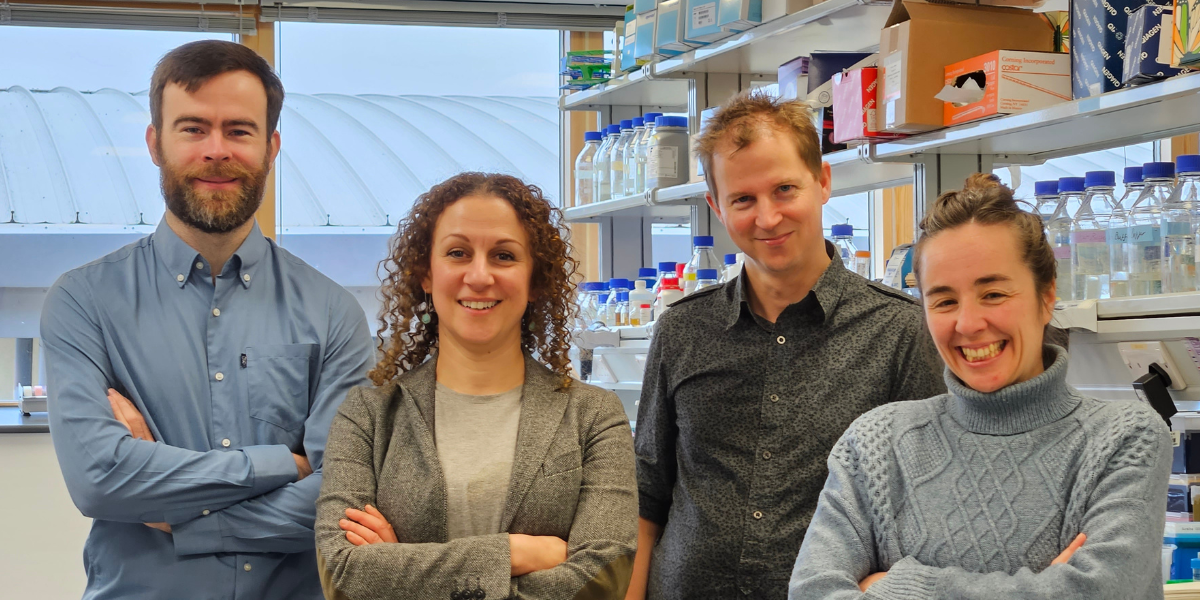

Maria Christophorou
4 months ago
PhD Studentship: Understanding the Functional Relationship Between c-Myc and PADI4 in Cancer and Tissue Regeneration Babraham Institute (Cambridge) in United Kingdom
Degree Level
PhD
Field of study
Cancer Biology
Funding
Full funding availableDeadline
December 31, 2026
Country
United Kingdom
University
Babraham Institute (Cambridge)

How do I apply for this?
Sign in for free to reveal details, requirements, and source links.
Where to contact
Keywords
About this position
This PhD studentship at the Babraham Institute, a world-leading centre for fundamental biological research and a University Partner Institute of the University of Cambridge, offers an opportunity to investigate the functional relationship between the transcription factor c-Myc and the enzyme peptidylarginine deiminase IV (PADI4) in the contexts of tissue regeneration and cancer biology. The project will be supervised by Dr Maria Christophorou and will commence in October 2026, leading to a University of Cambridge PhD degree. The Babraham Institute provides outstanding scientific facilities and a collaborative research environment, supporting advanced research techniques and technologies.
The project aims to elucidate how c-Myc, a key transcription factor and proto-oncogene, regulates PADI4, an enzyme involved in post-translational modification of histones through citrullination. Deregulation of c-Myc is associated with poor cancer prognosis, but it also plays a role in tissue regeneration and cellular reprogramming. The Christophorou lab has identified a role for PADI4 in cell reprogramming and tissue regeneration, with evidence suggesting that c-Myc is necessary and sufficient for PADI4 induction and activity. This process involves chromatin release and activation of innate immune signalling, which may influence neighbouring cells and tissue states.
The project is structured around three main aims: (1) defining the mechanism by which c-Myc induces PADI4, using cell lines and genomic techniques such as CUT&Run and RNA-sequencing; (2) understanding the consequences of Myc-driven PADI4 activation in stem and cancer cells, including impacts on transcriptional regulation, epigenetic reprogramming, and extracellular chromatin release; and (3) investigating Myc-driven PADI4 activation during tissue regeneration using mouse models, in collaboration with Dr Cathy Wilson at the University of Cambridge. The research will generate the first genome-wide datasets of histone citrullination and PADI4, and employ advanced imaging and biochemical assays.
Applicants will benefit from access to the Institute’s facilities and expertise, and will be part of a vibrant postgraduate community. Funding is available for up to 3 years, with specific sources for EU and overseas students; non-EU nationals must secure funding for fees and personal support. Applicants must meet University of Cambridge eligibility criteria, including academic qualifications and, where applicable, English language proficiency. The application deadline is November 24, 2025.
Applications must be submitted via the University of Cambridge Graduate Application Portal. Short-listed candidates will be invited for interviews at the Institute, with reasonable travel expenses covered. For further information, applicants can contact the Graduate Studies Programme Administrator at [email protected].
Funding details
Full funding including tuition fees and living expenses is available for this position. The scholarship covers all educational costs and provides a monthly stipend.
How to apply
Please submit your application including a cover letter, CV, academic transcripts, and contact information for two references. Applications should be sent via the online portal before the deadline.
Ask ApplyKite AI
Professors
How do I apply for this?
Sign in for free to reveal details, requirements, and source links.