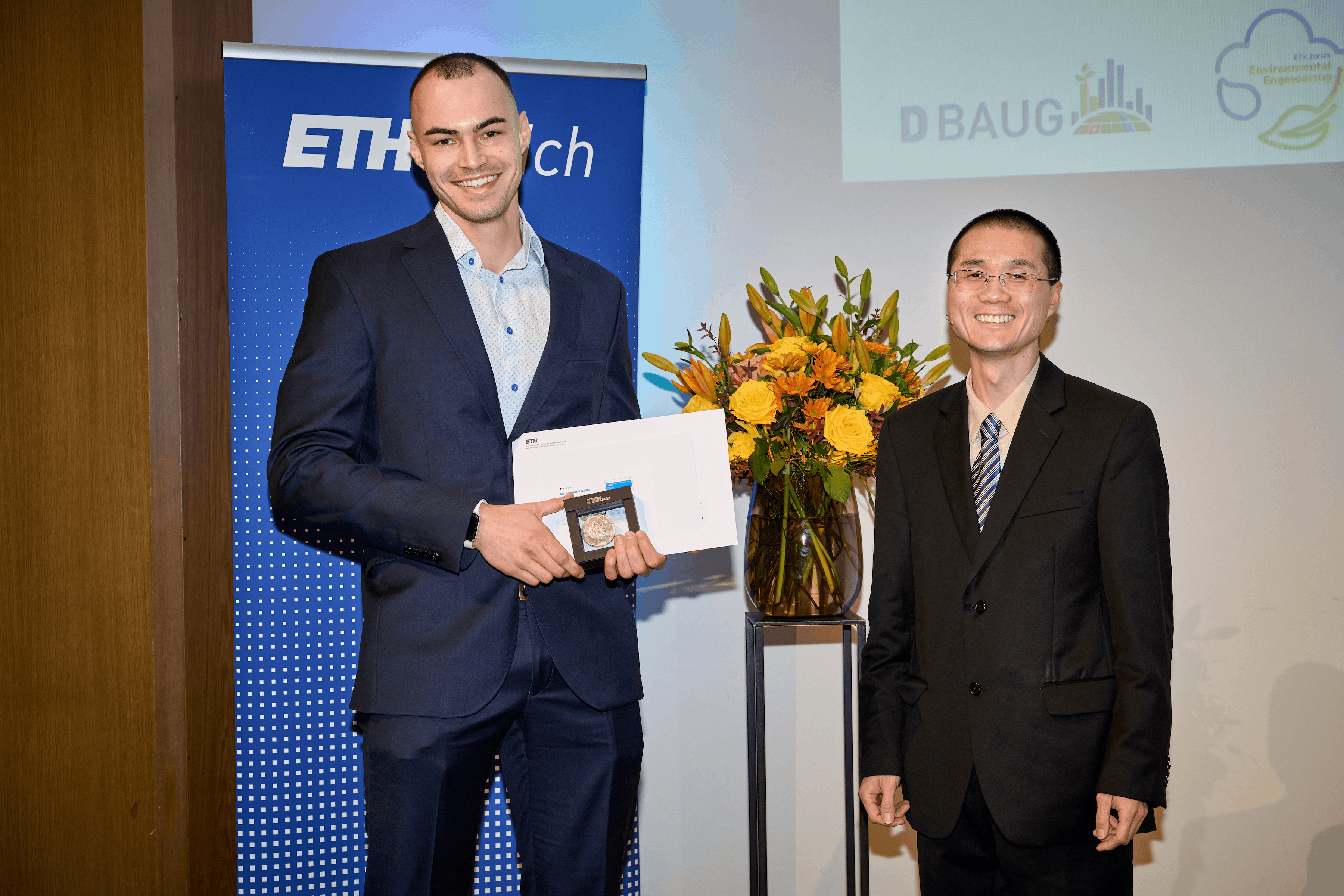

Jing Wang
8 months ago
This position has expired. You can find similar positions from the section below or browse our positions listing pages.
PhD position - Electrochemistry for Environmental Applications ETH Zürich in Switzerland
Degree Level
PhD
Field of study
Chemistry
Funding
Available
Deadline
Expired

Country
Switzerland
University
ETH Zürich

How do I apply for this?
Sign in for free to reveal details, requirements, and source links.
Suggested positions




Keywords
About this position
ETH Zürich invites applications for a PhD position in the Air Quality and Particle Technology group, supervised by Prof. Dr. Jing Wang. The successful candidate will be based at the Laboratory of Building Energy Materials and Components at Empa and will matriculate at ETH Zürich, one of the world’s leading universities in science and technology. The position is available from June 2026 or upon agreement.
This research opportunity centers on the use of electrochemistry to address pressing environmental challenges. The group’s work includes the development of advanced electrochemical sensors for real-time detection of environmental pollutants, such as airborne viruses, antibiotic resistance genes, volatile organic compounds (VOCs), and perfluoroalkyl substances (PFAs). Ongoing investigations focus on electrode materials, manufacturing processes, and signal amplification and modulation, with the aim of strengthening the environmental applications of electrochemistry.
The PhD student will engage in designing innovative electrode materials with engineered nanostructures, fabricating these materials using micro-nanofabrication technologies, and investigating electrochemical mechanisms for both sensing and catalytic applications. The research also extends to developing solutions for pollution mitigation and resource recovery. The group’s expertise in nanomaterial engineering, micro-optics, and microfluidics offers a broad spectrum of research opportunities for the candidate.
ETH Zürich fosters a culture of inclusion, diversity, and sustainability. The university provides numerous benefits, including public transport season tickets, car sharing, sports facilities, childcare, and attractive pension plans. The working and learning environment is designed to support professional development and positive societal impact.
Eligibility requirements include a master’s degree in chemical engineering, materials science, environmental engineering, or a related field, with excellent academic performance. Strong experimental skills and proficiency in English are essential. Applicants should prepare a curriculum vitae, complete academic transcripts, copies of diplomas/certificates, contact information for 2-3 referees, and a short description of research interests.
Applications must be submitted exclusively through the ETH Zürich online application portal. Email or postal applications will not be considered. For further information, contact Prof. Jing Wang at [email protected].
ETH Zürich is renowned for its commitment to excellence in education, fundamental research, and the transfer of new knowledge into society. With a diverse community of over 30,000 people from more than 120 countries, the university provides an inspiring environment for independent thinking and collaborative problem-solving to address global challenges.
Funding details
Available
What's required
Applicants must hold a master's degree in chemical engineering, materials science, environmental engineering, or a closely related field with excellent grades. Strong experimental skills are highly valued. A good command of English is required. Candidates should submit a curriculum vitae, complete academic transcripts (undergraduate and graduate), copies of diplomas/certificates, contact information for 2-3 referees, and a short description of research interests.
Ask ApplyKite AI
Professors
How do I apply for this?
Sign in for free to reveal details, requirements, and source links.