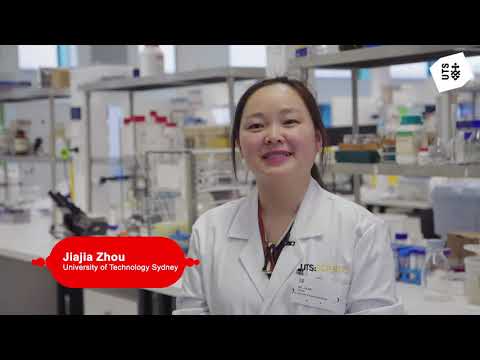
PhD Position: Surface Engineering of Inorganic Nanoparticles in Quantum Biotechnology
The Australian Research Council Centre of Excellence in Quantum Biotechnology (QUBIC) is pioneering research at the intersection of quantum physics and biotechnology, aiming to revolutionize biomedical imaging, chemical design, and clean energy. QUBIC is a collaborative initiative administered by the University of Queensland, with nodes at several leading Australian universities, including the University of Technology Sydney (UTS), where this PhD position is based. The Centre partners with industry giants and international universities, fostering a vibrant research environment and offering access to cutting-edge facilities and expertise.
This PhD project, supervised by Professor Jiajia Zhou at UTS, focuses on the surface engineering of inorganic nanoparticles for advanced applications in quantum biotechnology. The research will involve modifying nanoparticle surfaces to enable precise targeting of cellular organelles, developing strategies to deliver nanoparticles into cells while avoiding endosomal entrapment, and designing small, bright optical nanoparticles with hydrophilic surfaces. The project also includes using these nanoparticles for cellular imaging and sensing at the single-cell level, contributing to fundamental understanding and technological innovation in biomedical science.
Applicants should have a strong background in surface modification, delivery, and synthesis of inorganic nanoparticles, as well as experience in cellular imaging or sensing. Essential qualifications include a UTS-recognised MSc Research or MSc Coursework degree with a research thesis of at least 6 months, or a Bachelor Honours degree with 1st Class, 2nd Class Division 1, or division 1 honours, or an equivalent or higher qualification. A publication record in high-quality, peer-reviewed journals and excellent English communication and writing skills are required. Both international and domestic students are eligible, but international applicants must meet Australian student visa requirements for full-time, on-campus study.
The position is fully funded, offering a stipend of $37,000 per year and an additional $7,500 for PhD-related expenses over 3.5 years. The application process is open until all positions are filled, with a final deadline of May 31, 2026. Interested candidates should submit their CV and publication list to Prof. Jiajia Zhou at [email protected]. Shortlisted applicants will receive further instructions. For more details on application essentials, visit the UTS Graduate Research applications page. Additional fully funded scholarships and awards are available for eligible students through the UTS Science Faculty and university scholarship search tools.
This opportunity is ideal for candidates passionate about quantum biotechnology, nanoparticle engineering, and interdisciplinary research, offering a pathway to contribute to Australia’s quantum economy and global scientific advancement.