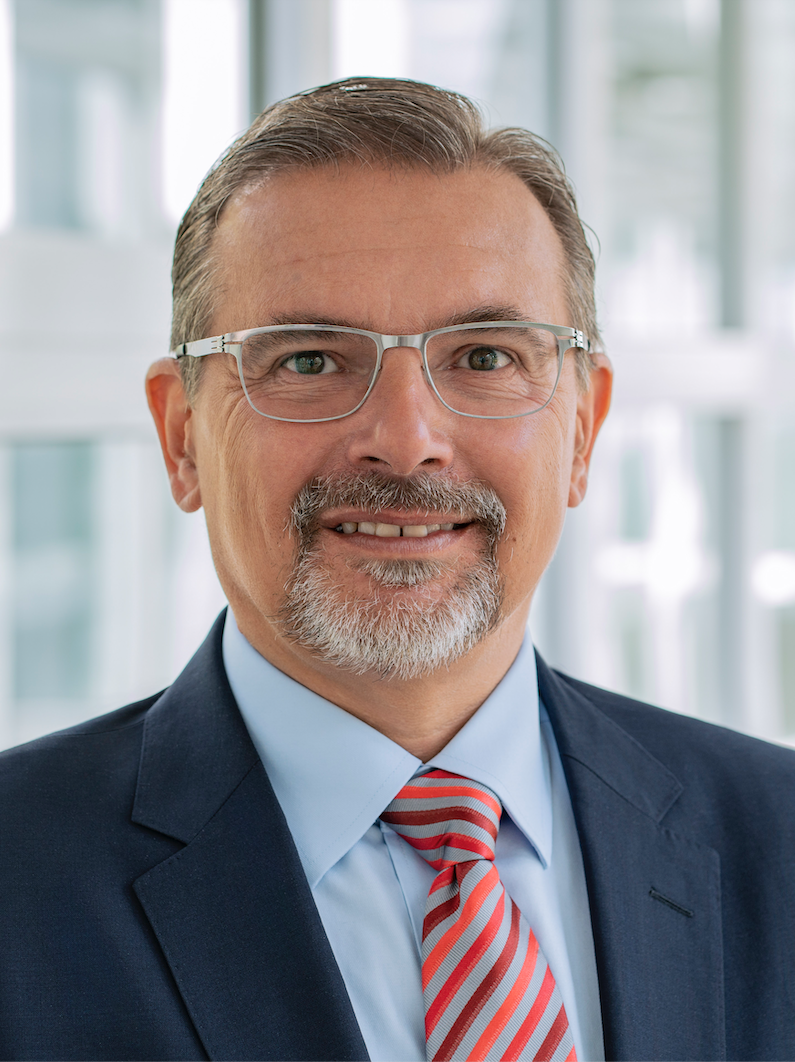
Karel Kellens
Prof. dr. ing. at KU Leuven

Research Interests
Explore related searches
Contact this professor
About
Prof. dr. ing. Karel Kellens is a faculty member at KU Leuven in Belgium. His research primarily focuses on the design and evaluation of innovative robotic systems, including haptic teleoperation and deep learning techniques for robotic grasping. He is also engaged in the automated assembly of non-rigid objects, contributing to advancements in industrial automation and robotics.
Positions (2)


Articles (3)
Design and Evaluation of an Intuitive Haptic Teleoperation Control System for 6-DoF Industrial Manipulators
Industrial robots are capable of performing automated tasks repeatedly, reliably and accurately. However, in some scenarios, human-in-the-loop control is required. In this case, having an intuitive system for moving the robot within the working environment is crucial. Additionally, the operator should be aided by sensory feedback to obtain a user-friendly robot control system. Haptic feedback is one way of achieving such a system. This paper designs and assesses an intuitive teleoperation system for controlling an industrial 6-DoF robotic manipulator using a Geomagic Touch haptic interface. The system utilises both virtual environment-induced and physical sensor-induced haptic feedback to provide the user with both a higher amount of environmental awareness and additional safety while manoeuvering the robot within its working area. Different tests show that the system is capable of fully stopping the manipulator without colliding with the environment, and preventing it from entering singularity states with Cartesian end effector velocities of up to 0.25 m/s. Additionally, an operator is capable of executing low-tolerance end effector positioning tasks (∼0.5 mm) with high-frequency control of the robot (∼100 Hz). Fourteen inexperienced volunteers were asked to perform a typical object removal and writing task to gauge the intuitiveness of the system. It was found that when repeating the same test for a second time, the participants performed 22.2% faster on average. The results for the second attempt also became significantly more consistent between participants, as the inter quartile range dropped by 82.7% (from 52 s on the first attempt to 9 s on the second).
Year:
2023
Collaborators (2)
Franz Dietrich
Technische Universität Berlin
Eric Demeester
Katholieke Universiteit Leuven

How do I reach out?
Sign in for free to see their profile details and contact information.