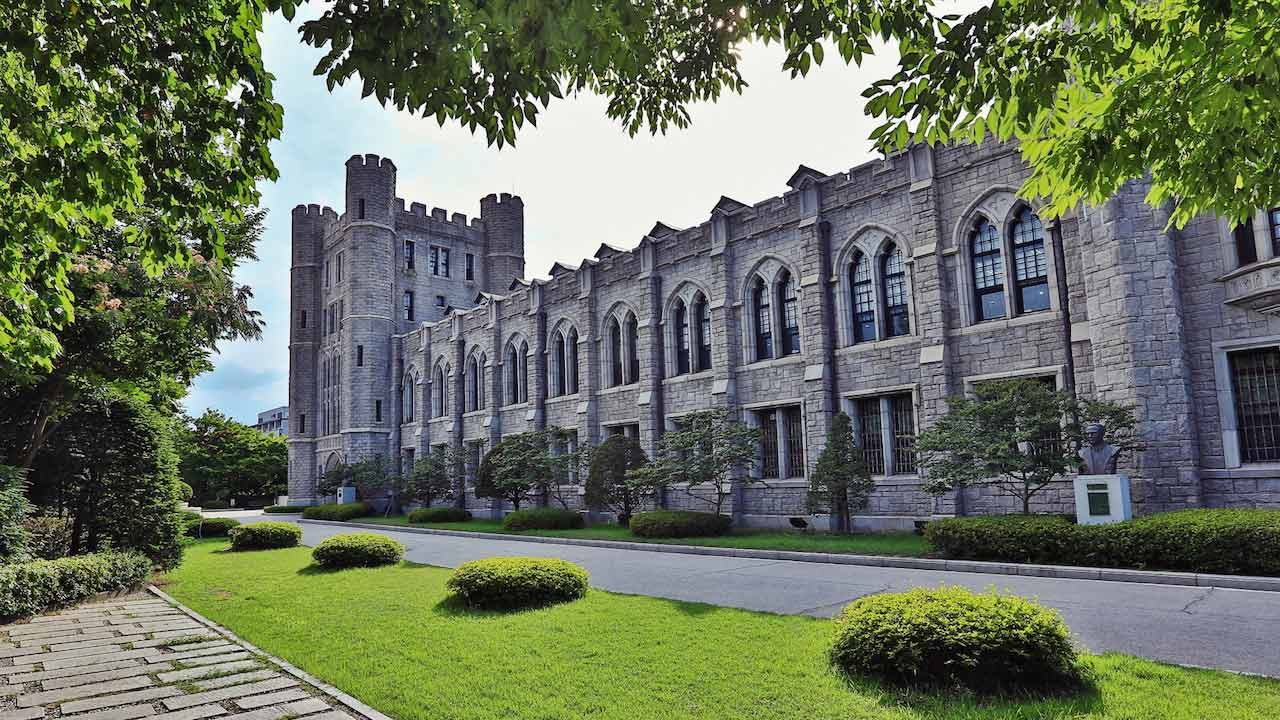
Gone are the days when only the USA, Canada, and European countries were the top destinations for a PhD degree. South Korea has become one of Asia’s most dynamic academic destinations, and nowadays, many talented students are considering it for a prosperous and thriving doctoral degree. Whether you are studying medicine, humanities, art, or even engineering, South Korea is one of the best places you can choose for a bright academic future and a promising career path.
South Korea is known for attracting thousands of international researchers and students each year, mainly due to its innovative education system, which helps students find their passion and delve deep into it with professional guidance from top supervisors. Choosing South Korea for a PhD degree means joining world-class research institutions and building strong connections between academia, job markets, and industries.
If you have finished your Master's degree and are looking for reputable countries to apply for a PhD, this guide is for you. Follow this article and explore everything you need to know about applying for a PhD in South Korea in 2026.

Why Choose South Korea for a PhD?
Studying for a PhD is not just about education; you will spend at least 4 years in that country, so it's essential to choose wisely and consider the quality of life and overall satisfaction, not just top-ranked universities. South Korea has rapidly become a global research hub for young scholars seeking a thriving environment to achieve their goals and dreams. Plus, the government has invested significantly in education and innovation, which makes South Korea’s universities, including Seoul National University, KAIST, POSTECH, and Yonsei University, globally popular.
PhD students gain access to cutting-edge labs, generous funding, and international publishing opportunities. Regardless of the subject or field of interest, studying in South Korea means preparing for the job market and building a strong, promising career.
Another advantage of studying for a doctoral degree in South Korea is that many programs are now offered entirely in English, making it highly accessible to international candidates, especially in science and engineering. Combined with affordable tuition, full scholarships, and a dynamic student life, the country stands out as one of the best destinations for pursuing a PhD in 2026.
Table: Top 5 Universities in South Korea for Fully Funded PhD Programs (2026)
|
University |
City |
Average Cost of Living (Monthly) |
Top Research Fields |
Estimated Acceptance Rate |
|
Seoul National University (SNU) |
Seoul |
₩1,200,000 – ₩1,500,000 |
Engineering, Natural Sciences, Humanities |
~15 – 20% |
|
KAIST (Korea Advanced Institute of Science & Technology) |
Daejeon |
₩900,000 – ₩1,200,000 |
AI, Robotics, Materials Science, Mechanical & Electrical Engineering |
~10 – 15% |
|
POSTECH (Pohang University of Science & Technology) |
Pohang |
₩800,000 – ₩1,000,000 |
Energy Systems, Physics, Nanotechnology, Computer Science |
Highly selective (under 10%) |
|
Yonsei University |
Seoul |
₩1,000,000 – ₩1,400,000 |
Business, Social Sciences, Medicine, Engineering |
~15 – 20% |
|
Korea University |
Seoul |
₩1,000,000 – ₩1,400,000 |
Law, Economics, Engineering, International Relations |
~20% |
Read more: PhD opportunities in South Korea
Application Process for a PhD Degree in South Korea
Applying for a PhD in South Korea may feel overwhelming at first, especially when it comes to knowing how to start, finding positions, and choosing a suitable university. Understanding the process clearly and following the step-by-step application process would be straightforward and structured. The first and most crucial step is finding a university and a supervisor whose research aligns with your academic goals.
If you have a problem at this stage, you may get confused about how to choose a university, which one is best for you, and how to connect with a supervisor. Just check on ApplyKite and use the AI tool, or check on the latest positions. All programs and positions are up to date, and you can filter them by your personal preferences, interests, and needs.
Korean universities are highly praised for their mentorship, so it’s best to contact potential supervisors before applying. Find your field of interest and start emailing. Please send a brief email introducing yourself, your academic background, and a short research proposal that aligns with their work. However, it's best to check whether you need to submit a proposal for the application.
Most applications are submitted online, including transcripts, degree certificates, recommendations, and language test results. After submission, expect a departmental review and an online interview. Admissions for doctoral degrees in South Korea’s educational institutions open twice a year: for the spring semester (March), with deadlines around September, October, and for the autumn semester (September), with deadlines in March, April. Always confirm exact dates on each university’s website. Make sure to check the deadlines on each university’s website.
Eligibility and Admission Requirements
There are a few necessary documents that you need to prepare before the application. First of all, you need to hold a master’s degree or an equivalent qualification in a related field. Note that a strong academic record, research background, and usually a GPA of 3.0 or above on a 4.0 scale are often expected. However, you might encounter different expectations, so it's better to check separately. Plus, most universities also require proof of language proficiency, depending on the program’s language of instruction.
If you are applying to an English-taught program, you need to submit your TOEFL or IELTS scores for international applicants. In contrast, Korean-taught programs may require a TOPIK (Test of Proficiency in Korean) certificate.
Moreover, another crucial step is to offer a well-written research proposal, a vital component of your application that clearly explains your research question, interests, goals, references, methodology, and objectives, showing how your study contributes to the field and sheds light on unknown aspects of the research. Many applicants tailor their proposals to align with their potential supervisor’s ongoing projects, which increases the likelihood of acceptance. Finally, your application package should include letters of recommendation, a statement of purpose, and your updated CV.
Funding, Scholarships, and Financial Proof
Funding and financial aspects have always been two main concerns and challenges for the applicants. The good news is that South Korea offers some of the most generous PhD funding worldwide. No matter your subject, you can always count on full funding.
Many PhD programs in South Korea are fully funded, meaning tuition, living, and research costs are covered. One of the most valuable and well-known funding sources is the Global Korea Scholarship (GKS), providing full tuition, airfare, health insurance, and a ₩1.5 million monthly allowance.
Top universities like KAIST, POSTECH, and SNU also offer internal scholarships and paid research or teaching assistantships, giving students a stable income and work experience. For your student visa, you’ll need proof of sufficient funds, usually through scholarship documents or a bank statement showing an annual balance of around ₩10–12 million.
Visa and Immigration Process
After receiving admission, apply for a D-2 Student Visa at the Korean embassy with your admission letter, proof of funds, and passport. These are all essential documents, and even missing one can lead to rejection and a delay in the process, potentially costing you the opportunity. The method of visa acceptance takes about 4–6 weeks.
Upon arrival, register for an Alien Registration Card (ARC) within 90 days to access services like banking and housing. Graduates can stay to work by applying for a D-10 job-seeker visa or an E-3 research visa. Many international PhD holders remain in Korea due to strong academic and industry ties.
Why Is South Korea Worth It?
Pursuing a PhD in South Korea is more than an academic goal; it’s a chance to grow in one of the world’s leading innovation hubs. With globally recognized universities, generous funding, and a vibrant research culture, South Korea offers an ideal environment for ambitious scholars. Combine that with a safe, modern lifestyle, and it’s easy to see why the country attracts top talent. Start preparing now with clear goals and early planning, and your dream of earning a fully funded PhD in South Korea in 2026 can become a reality.
Finally, platforms such as ApplyKite can simplify your PhD search by providing clear direction along your path, allowing you to explore fully funded opportunities, filter by research field easily, and even use AI tools to match your academic profile with available positions. ApplyKite also offers resume reviews and tools to find a supervisor, making it easier to plan and execute your application successfully.