

European Synchrotron Radiation Facility (ESRF)
5 days ago
Post-doc (f/m) on beamline ID10-SURF in the X-ray Diffraction and Scattering Group European Synchrotron Radiation Facility (ESRF) in France
Degree Level
Postdoc
Field of study
Chemistry
Funding
Available

Country
France
University
European Synchrotron Radiation Facility (ESRF)

How do I apply for this?
Sign in for free to reveal details, requirements, and source links.
More information can be found here
Keywords
Suggested positions



About this position
The European Synchrotron Radiation Facility (ESRF) in Grenoble, France, is recruiting a Post-doc (f/m) on beamline ID10-SURF in the X-ray Diffraction and Scattering Group. The ESRF is an international research centre and one of the world’s leading synchrotron facilities, supporting a wide range of scientific areas including biology, medicine, environmental sciences, cultural heritage, materials science, and physics.
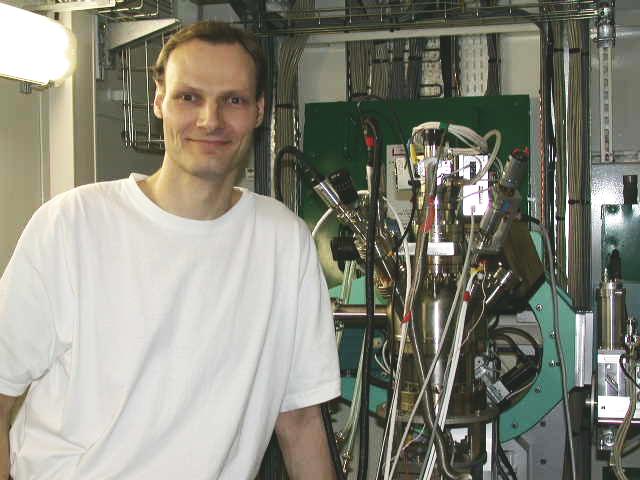
This postdoctoral opportunity is based in the X-ray Diffraction and Scattering Group and focuses on the operation and scientific exploitation of the ID10 surface scattering station. The successful candidate will contribute to beamline operation, support external users as a local contact, and develop an independent research programme on the interactions between biological membrane mimics at liquid interfaces and macromolecules such as polymers and proteins. The project uses X-ray surface scattering methods and involves developing robust, chemically and physically consistent strategies for analysing surface X-ray scattering data, along with custom sample cells tailored to the beamline.
ID10 is dedicated to the study of hard and soft condensed matter surfaces and interfaces using techniques including X-ray reflectivity (XRR), grazing-incidence wide-angle scattering (GIWAXS), grazing-incidence small-angle scattering (GISAXS), and complementary tools such as XRF and XANES. A major feature is the double crystal deflector (DCD), which enables studies of liquid surfaces and buried interfaces. The station also offers a Langmuir trough and a reactor for chemical vapour deposition (CVD) growth of 2D materials on liquid metal catalysts.
Current in-house research topics include Langmuir films that mimic cell membranes, nanoparticle assembly at liquid interfaces, and catalysis, including CVD growth of 2D materials on liquid metal catalysts and Fischer-Tropsch synthesis. The post is therefore well suited to candidates interested in surface science, soft matter, condensed matter physics, and X-ray scattering instrumentation.
The position is open to applicants with a PhD in Physics, Chemistry, or a closely related field earned within the last 3 years. The ESRF is seeking someone with strong instrumentation and data analysis skills, knowledge of surface science, liquid surfaces, soft matter or solid-state physics, experience with X-ray or neutron scattering, and basic scattering data modelling ability. Programming experience in Python or MATLAB is also required, together with the ability to work effectively in a multidisciplinary environment with staff and facility users.
The appointment is an 18-month contract, renewable for a further 6 to 18 months. The ESRF offers a competitive compensation and allowances package, including relocation support for Grenoble, and encourages applications from candidates of all backgrounds, including disabled persons.
To apply, use the provided application link and consult the ESRF employment terms and conditions page for further information.
Funding details
Available
What's required
Applicants must hold a PhD in Physics, Chemistry, or a closely related field obtained within the last 3 years. Strong aptitude for instrumentation and data analysis is required, along with knowledge of surface science, liquid surfaces, soft matter, or solid-state physics. Experience applying X-ray or neutron scattering techniques to soft matter or related systems is expected, and basic knowledge of scattering data modelling is essential. Candidates should have data analysis skills, programming experience in Python or MATLAB, and the ability to work effectively with multidisciplinary staff and facility users.
How to apply
Apply via the provided application link. Review the ESRF employment information page for terms and conditions before submitting your application. For questions, contact Dr. Oleg Konovalov by email.
Ask ApplyKite AI
How do I apply for this?
Sign in for free to reveal details, requirements, and source links.