Scholarships for Indian Students 2027: Fully Funded List
ApplyKite Editorial
Author

We have seen it all the time. Our mentors on ApplyKite’s team meet Indian students with a great profile and a real shot at studying abroad, held back by the money.
Tuition at a top UK or US university can run to tens of lakhs of rupees a year, and that’s before rent, food and flights.
The good news is that a fully funded scholarship covers all of it: your tuition, your living costs and, usually, your flights. You can skip the big education loan.
So we’ve put together 18 fully funded scholarships that Indian students can apply for to study abroad in 2027, from Gates Cambridge and Clarendon to Erasmus Mundus and the Government of India’s National Overseas Scholarship.

Fully Funded Scholarships for Indian Students to Apply in 2027
This table puts all 18 scholarships in one place so you can compare them quickly. The open scholarships come first, sorted by closest deadline, followed by the ones opening in the new year.
Table 1: Quick List of the Fully Funded Scholarships
| Scholarship | Country | Level | Work exp. needed? | Status | Deadline |
|---|---|---|---|---|---|
| ETH Zurich ESOP | Switzerland | Master's | No | Open | 30 Nov 2026 |
| Commonwealth Shared | UK | Master's | No | Open | 8 Dec 2026 |
| Gates Cambridge | UK | Master's, PhD | No | Open | 8 Dec 2026 or 6 Jan 2027 |
| Clarendon | UK | Master's, PhD | No | Open | Dec 2026 or Jan 2027 |
| MBZUAI | UAE | MSc, PhD | No | Open | 15 Dec 2026 |
| Cornell Tata | USA | Bachelor's | No | Open | 2 Jan 2027 |
| KAUST Fellowship | Saudi Arabia | MS, PhD | No | Open | 3 Jan 2027 |
| Felix | UK | Master's, PhD | No | Open | Varies by university |
| Erasmus Mundus | Europe | Master's | No | Open | Varies by programme, mostly Oct–Jan |
| Chinese Government Scholarship | China | All levels | No | Open | Varies by university |
| Stipendium Hungaricum | Hungary | All levels | No | Opening soon | Expected mid-Jan 2027 |
| Türkiye Bursları | Turkey | All levels | No | Opening soon | 10 Jan–20 Feb 2027 |
| GKS Graduate | South Korea | Master's, PhD | No | Opening soon | Expected Feb 2027 |
| Joint Japan/World Bank | Partner universities | Master's | Yes, 3 years | Opening soon | 26 Feb or 21 May 2027 |
| ADB-Japan | Asia-Pacific | Master's | Check programme | Set by university | Varies |
| National Overseas Scholarship | Any country | Master's, PhD | No | Opening soon | Apr/May 2027 |
| Fulbright-Nehru Master's | USA | Master's | Yes, 3 years | No 2027-28 round | Expected Feb 2027 |
| Rhodes Scholarship for India | UK | Postgraduate | No | Closed | Reopens around June 2027 |
Important note: It should be kept in mind that not every scholarship covers all costs. The Cornell Tata Scholarship is awarded according to the financial circumstances of your family. The Stipendium Hungaricum provides a fairly modest monthly stipend. The Chinese Government Scholarship does not usually include airfare.
Table 2: Which Scholarships Fit Your Profile?
You don't need to read about all 18 scholarships. Find yourself in this table and start with those.
| If you are... | Start with |
|---|---|
| A fresh graduate with no work experience | Gates Cambridge, Clarendon, Commonwealth Shared, Erasmus Mundus, Felix |
| A top performer | ETH ESOP, Gates Cambridge, Clarendon |
| Studying STEM or AI | KAUST, MBZUAI, ETH ESOP |
| A working professional in development | Joint Japan/World Bank, ADB-Japan |
| From an SC, DNT or allied category, with family income under ₹8 lakh | National Overseas Scholarship |
| Finishing Class 12 | Cornell Tata, Türkiye Bursları, Stipendium Hungaricum, Chinese Government Scholarship |
| Planning a PhD | Gates Cambridge, Clarendon, KAUST, MBZUAI, National Overseas Scholarship, GKS |
| Open to studying in Asia or Eastern Europe | Türkiye Bursları, GKS, Chinese Government Scholarship, Stipendium Hungaricum |
Fully Funded Scholarships Only for Indian Students
The majority of lists of scholarships for Indian students in 2027 are in fact international lists. This which means that you would be competing against applicants from every country. The five scholarships below differ in this respect.
They are fully funded and are meant either solely or mainly for Indian students, so the pool of competitors is considerably smaller.
1. Felix Scholarship:
The Felix Scholarship is one of the best fully funded master's scholarships for Indian students who want to study in the UK. It pays your full tuition and living costs.
Who can apply: Indian nationals with a first-class degree who couldn't afford to study in the UK without financial help.
Status: Open.
Deadlines: These vary by university.
- University of Reading: 28 January 2027 (applications open in December 2026).
- SOAS University of London: 26 February 2027.
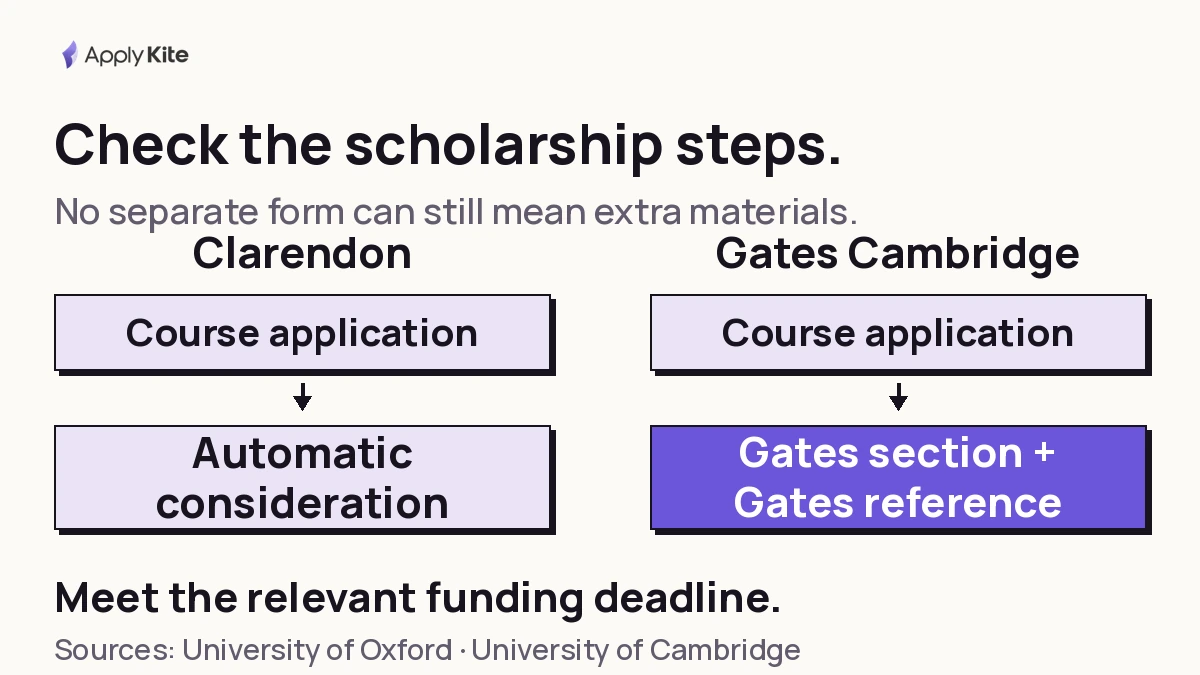
- University of Oxford: No separate Felix Scholarship application is needed. Eligible candidates are considered automatically when they apply for their course by the relevant funding deadline, which is usually in December or January.
2. National Overseas Scholarship:
The National Overseas Scholarship is a Government of India scheme run by the Ministry of Social Justice and Empowerment. It funds a master's or PhD at universities in any country. It covers your tuition and visa fees. Medical insurance and flight are also supported. Plus, you’ll receive a yearly living allowance of US$15,400, or £9,900 if you study in the UK.
Who can apply: Students from Scheduled Castes, Denotified, Nomadic and Semi-Nomadic Tribes, and landless agricultural labourer and traditional artisan families. You'll need:
- a family income under ₹8 lakh a year
- at least 60% marks in your qualifying degree
- to be 35 or under
Status: Opening soon.
Deadline: The first round for 2027-28 opens in April or May 2027 and remains open for about 40 days. The window for application is short. It is advisable to have your documents ready well in advance.
3. Cornell Tata Scholarship:
The Cornell Tata Scholarship is for students who want to do a bachelor's degree at Cornell University in the US. It's funded by a Tata Trust endowment and covers your full demonstrated need. Cornell works out how much your family can contribute, and the scholarship pays the rest.
Who can apply: Students who went to secondary school in India, are admitted to Cornell as undergraduates and qualify for need-based financial aid.
Status: Open.
Deadline: The deadline is 2 January 2027. No separate scholarship form exists; instead, you apply to Cornell through Regular Decision and submit the CSS Profile financial aid form by the same date.
4. Fulbright-Nehru Master's Fellowship:
The Fulbright-Nehru Master's Fellowship is one of the best-known routes to a fully funded US master's for Indian students. It funds up to two years of study at a US university.
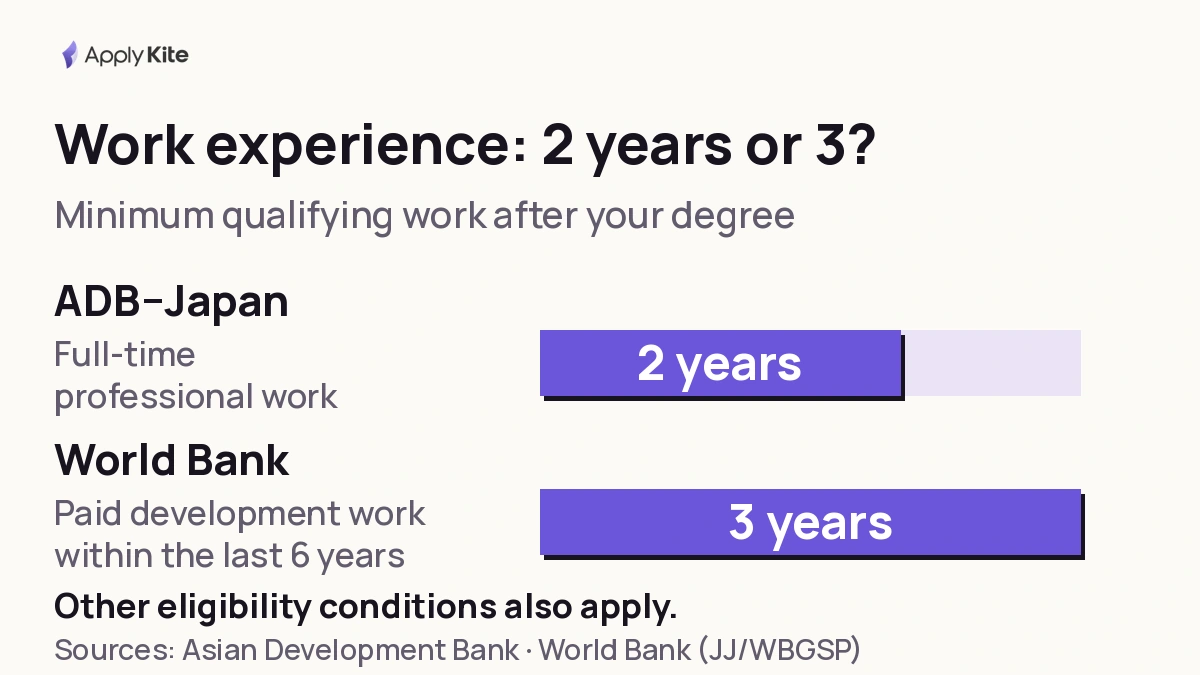
Who can apply: Indian graduates with at least three years of full-time, paid work experience in their field.
Status: There is no round for 2027-28.
Next window: A call is expected around February 2027 for entry in 2028. Although this has not yet been confirmed, as calls usually open in February. If the US is your goal, this year can be used to gain work experience and to prepare your application.
5. Rhodes Scholarship for India:
The Rhodes Scholarship for India is one of the oldest and most prestigious scholarships in the world. It funds postgraduate study at the University of Oxford. India has its own allocation of places, so you compete only with other Indian applicants.
Who can apply: Indian citizens applying for postgraduate study at Oxford.
Status: Closed for 2027.
Next window: The 2027 round closed on 23 July 2026. The next round usually opens in June. Anyone aiming for 2028 should therefore begin preparing now.
If You Don't Have Much Time and Deadlines Are Close
If you're starting from scratch today, don't try to apply to everything. Do these instead:
- Pick two awards with no separate form. Clarendon and KAUST need only your university application. So, one application covers both admission and funding. Gates Cambridge works the same way, with a few extra questions.
- Ask your referees this week. References are the slowest part of any application. Many universities won't accept them after the deadline. So, send that email early.
- Use one strong SOP as a base, then adjust it. Write one solid statement of purpose. Then tailor the opening and closing for each scholarship.
- Have a backup. If the December deadlines feel impossible, there are January and February windows coming. Türkiye Bursları, Stipendium Hungaricum and GKS Graduate give you more time.
Eligibility Criteria for Fully Funded Scholarships
Academic Record and CGPA Conversion
UK scholarships often ask for a "2:1" or "first-class" degree. The system is different for Indian universities use CGPA or percentages.
Many UK universities publish India-specific grade equivalents on their entry-requirements pages. So check the page for each university you're applying to. Some awards set a higher bar: ETH asks for the top 10% of your class, and GKS for 80% or the top 20%. Our post on CGPA converter can help you compare.
Work Experience
Only a few scholarships require work experience. Joint Japan/World Bank and Fulbright-Nehru Master's both ask for three years. If you're looking for scholarships without work experience, Gates Cambridge or Clarendon are good options. Also check the Commonwealth Shared and Erasmus Mundus.
English Language Tests
Most scholarships ask for IELTS or TOEFL. The required score depends on your university and course. Some waive the test if your degree was taught in English. Check each programme's requirements page.
Common Mistakes to Avoid
You've worked hard on your profile, shortlisted universities and prepared your documents. Don't let a few avoidable mistakes ruin your chances of getting funding.
Avoid these mistakes and you’ll be fine:
- Overlooking scholarship deadlines: Don't assume the scholarship deadline is the same as the university admission deadline. Oxford and Cambridge often have scholarship deadlines that fall before their admission deadlines. So, don't wait until you've received an offer to start looking for funding. You could end up with an admission offer but no scholarship.
- Don't submit a last-minute, copy-paste SOP: A generic statement copied across multiple applications rarely makes a strong impression. Start early and shortlist 3–5 suitable scholarships. Check whether they require separate application forms. It’s best to write a statement that speaks directly to what each scholarship is looking for.
- Applying for scholarships you're not eligible for: Always check eligibility before applying. Indian students cannot apply for Swedish Institute or Commonwealth PhD Scholarships.
- Don't guess your CGPA conversion: Every university can have its own grading system. Use the official Indian grade equivalency provided by the university. This is a much safer approach. Never trust a random conversion formula.
- Not checking what the scholarship pays for: Some awards sound fully funded but leave major expenses for you to handle. Make sure the scholarship matches your financial needs.
Frequently Asked Questions
1. Is it possible to get a 100% scholarship to study abroad?
Yes, it is possible. Numerous fully funded scholarships cover tuition fees and accommodation. Some of them also support living expenses. Other scholarships also provide airfare along with extra allowances. The competition is strong. So, apply to several scholarships at once. This will likely improve your chances.
2. Do fully funded scholarships cover all study abroad expenses?
Not in every case. Costs such as application fees and document attestation aren’t always covered. Also, initial visa charges may still have to be paid by you. Language tests are almost always not supported. These expenses should be planned for in advance.
3. Which fully funded scholarship is easiest for Indian students to obtain?
None of these scholarships is easy to secure. Awards intended specifically for India, such as the Felix Scholarship, may attract smaller pools of applicants. In addition, Clarendon and KAUST consider candidates automatically. You don’t need a separate scholarship application.
4. Which countries offer free education to Indian students?
Through government scholarships, Indian students can obtain fully funded education in Hungary and Türkiye. China and South Korea are also popular destinations. Germany, too, charges low or no tuition fees at many of its public universities.
5. Are fully funded scholarships available for Indian students after Class 12?
Yes. Undergraduate options include the Cornell Tata Scholarship and Türkiye Bursları. Depending on eligibility, Stipendium Hungaricum and the Chinese Government Scholarship are also available.
6. What are the best fully funded PhD scholarships for Indian students in 2027?
Among the best options for fully funded PhD study in 2027 are Gates Cambridge and Clarendon in the UK. KAUST and MBZUAI are well-known for Middle East.
7. Can I receive two fully funded scholarships at the same time?
In general, no. Applying to more than one scholarship is allowed. However, most programmes do not permit recipients to combine major funding awards.
8. Do fully funded scholarships cover dependents?
Most scholarships provide support for the student alone and not for family members. Fulbright-Nehru, for instance, does not normally offer financial support to dependents.
9. Do I have to return to India after completing my studies?
A mandatory return requirement is attached to some scholarships. Commonwealth and Fulbright-Nehru, as an example, expect scholars to return home once their studies are finished.
10. What if I don't get a fully funded scholarship?
In that case, partial university scholarships can be considered. Strengthen your application for the next cycle, or alternatives such as the JN Tata Endowment Loan Scholarship can be explored.
11. Do internships or volunteering count as work experience?
It depends on the scholarship. Chevening accepts paid and unpaid internships and voluntary work. In most cases full-time and part-time jobs are also supported by Chevening. Compulsory university placements do not count. DAAD EPOS, on the other hand, does not accept internships or voluntary work.
12. How much work experience do I need for Chevening?
Chevening requires at least two years of work experience. This is equivalent to 2,800 hours, gained after completing your undergraduate degree. You must also return to your home country for at least two years after the scholarship ends.
13. Can I still apply for the Chevening Scholarship for 2027?
No. Applications for the 2027–28 intake closed on 6 October 2026. Check the official Chevening website for dates for the next application cycle.
14. How do I apply for an Erasmus Mundus scholarship?
Apply directly to your chosen programme. Each programme has its own deadline. Most applications open between October and January. IELTS or TOEFL is usually required, although some programmes waive it if your previous degree was taught in English.


