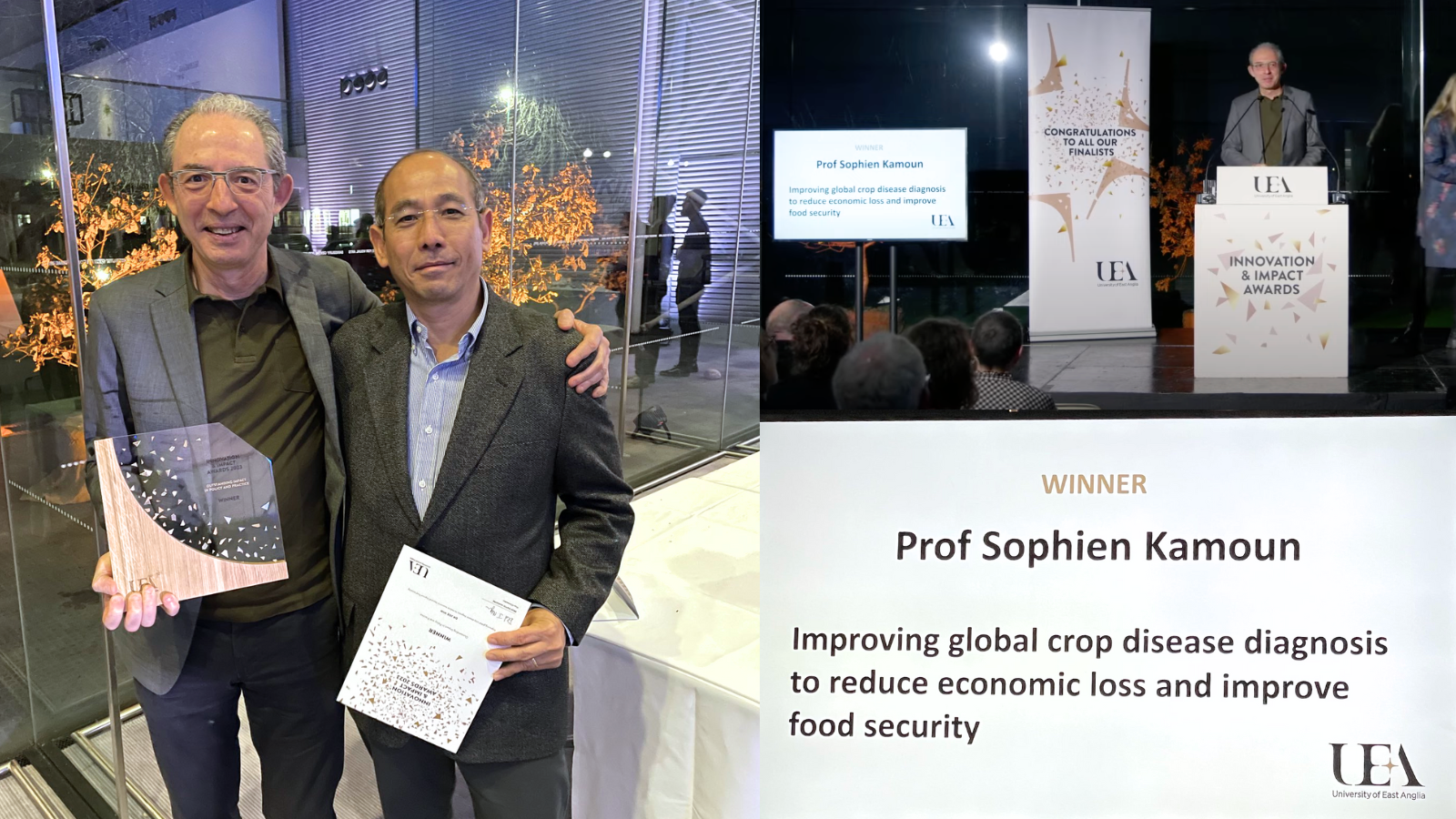

Diane Saunders
11 months ago
This position has expired. You can find similar positions from the section below or browse our positions listing pages.
PhD Studentship: Preserving native biodiversity and wheat production in Bhutan University of East Anglia in United Kingdom
Degree Level
PhD
Field of study
Molecular Biology
Funding
Fully-funded studentship (fees, stipend, RTSG); international fee difference waived for limited number of studentships; relocation, visa, and health surcharge costs not covered.
Deadline
Oct 1, 2026

Country
United Kingdom
University
University of East Anglia

How do I apply for this?
Sign in for free to reveal details, requirements, and source links.
Suggested positions






Keywords
About this position
This PhD project at the University of East Anglia, supervised by Professor Diane Saunders, addresses the urgent challenge of balancing biodiversity conservation with wheat production in Bhutan, a country renowned for its high species richness and endemic flora. Wheat is a vital crop in Bhutan, cultivated at high altitudes and integral to food security, culture, and religion. However, wheat production faces significant threats from biotic factors, particularly wheat rusts—fungal pathogens that can devastate crops and are known as the 'polio of agriculture.' Bhutan is a global hotspot for Berberis species, which play a key role in the lifecycle of wheat rusts and are also culturally and medicinally important.
The project aims to resolve the conflicting interests of preserving biodiversity while protecting wheat from rust outbreaks. The successful candidate will conduct fieldwork in Bhutan to map the spatial distribution and species composition of Berberis in major wheat-growing areas, assess the genetic diversity and rust resilience of Bhutanese wheat landraces, and develop spatial models to inform wheat planting strategies that safeguard biodiversity and suppress disease outbreaks.
Training will be provided in the Saunders Lab at the John Innes Centre, with additional expertise from Exeter University, CIMMYT, and the Bhutan National Plant Protection Centre. The position offers comprehensive training in field surveys, plant pathology, molecular biology, computational biology, and landscape modelling.
Applicants should hold at least a UK 2:1 Honours degree in Biology, Ecology, or a related discipline, and meet English language requirements (IELTS 6.5 overall, 6 in each category). The fully-funded ARIES studentship covers tuition, a maintenance stipend (£20,780 p.a. for 2025/26), and a research training and support grant. International applicants may have the difference between 'home' and 'international' fees waived, but relocation, visa, and health surcharge costs are not covered.
The project starts on 1 October 2026. This is an excellent opportunity for an enthusiastic researcher interested in interdisciplinary approaches to food production and conservation.
Funding details
Fully-funded studentship (fees, stipend, RTSG); international fee difference waived for limited number of studentships; relocation, visa, and health surcharge costs not covered.
What's required
Applicants must have at least UK equivalence Bachelors (Honours) 2:1 in Biology, Ecology, or a related field. English language proficiency is required: IELTS 6.5 overall, with at least 6 in each category. Enthusiasm for interdisciplinary research in food production and conservation is expected.
Ask ApplyKite AI
Professors
How do I apply for this?
Sign in for free to reveal details, requirements, and source links.